
Cockroach Janta Party’s 94% Audience Is From India: BJP Followers Spread Fake News Over Pakistan Connection
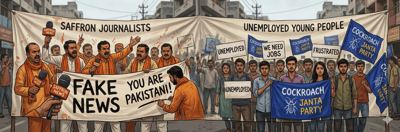
The digital political landscape has witnessed an explosive confrontation after the founder of the viral Cockroach Janta Party strongly rejected allegations made by top leaders of the Bharatiya Janata Party. Multiple Union ministers and senior ruling party members had alleged that a massive portion of the newly formed satirical movement digital following originated from Pakistan and cross-border influence networks. In a swift countermove to protect the credibility of his platform, founder Abhijeet Dipke released verified audience demographic analytics showing that more than 94 percent of the movement engagement originates directly from users within India. The development has rapidly turned a viral internet meme movement into a high-stakes political battleground involving national security narratives, youth frustration, and intense digital policing.
The controversy ignited after the Cockroach Janta Party experienced unprecedented growth on social media, quickly gaining massive traction among young users within just one week of its launch. This sudden surge in digital popularity clearly unnerved the political establishment, prompting a coordinated counter-narrative from ruling party leaders. Union ministers Kiren Rijiju and Sukanta Majumdar publicly attacked the digital movement, with Majumdar claiming that nearly half of the platform followers were located in Pakistan while only 9 percent belonged to India. Furthermore, senior party representatives suggested that the viral trend was part of a dangerous, weaponized cross-border influence operation funded by foreign interests to destabilize public trust and damage the global reputation of the administration.
Looking closely at the underlying friction, the emergence of the Cockroach Janta Party points to deep-seated systemic grievances felt by the modern Indian youth rather than foreign interference. The movement initially began as a satirical protest against recent controversial remarks concerning unemployed youth, but it quickly evolved into an active digital campaign addressing core socio-economic issues. The platform has successfully channeled public anger surrounding competitive exam paper leaks and widespread unemployment, even launching a massive online petition demanding the immediate resignation of the Union Education Minister. By framing a highly localized youth protest as a foreign conspiracy, the ruling establishment attempted to neutralize a domestic public relations crisis, but the strategy faced immediate pushback once the founder produced concrete demographic analytics.
The unfolding situation highlights the growing power of digital satire and the extreme sensitivity of the current political ecosystem toward organic online movements. Following the explosive growth of the platform, the official website was taken down and its main communication accounts faced sudden hacking attempts and local regulatory restrictions. While the ruling party continues to view such rapid, meme-driven mobilization as a potential threat to national stability, the sheer volume of domestic engagement proves that digital satire has become a preferred tool for youth political expression. As the movement continues to navigate regulatory blockages and political pressure, the ongoing dispute demonstrates how quickly internet subcultures can challenge established political structures and force national leaders to respond to digital dissent.