
India and New Zealand Seal Massive Trade Deal: What This Means for Your Pocket and Jobs!
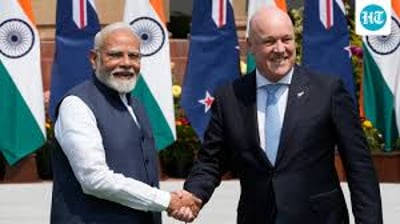
On April 27, 2026, India and New Zealand officially entered into a new era of economic friendship by signing a Comprehensive Free Trade Agreement (FTA). The deal was inked in New Delhi by India’s Commerce Minister Piyush Goyal and New Zealand’s Trade Minister Todd McClay. This is not just a piece of paper; it is a "once-in-a-generation" pact that aims to make trading between the two countries as easy as buying groceries from a local store. For India, the biggest win is that New Zealand will now allow 100% of Indian exports—including clothes, jewelry, cars, and medicines—to enter their country without any extra taxes (customs duties). On the flip side, India is opening its doors to New Zealand’s high-tech goods and some agricultural products, though it has carefully protected our local farmers by keeping sensitive items like dairy and certain vegetables out of the deal.
Beyond just buying and selling goods, this agreement is a massive win for young Indian professionals. A new "Temporary Employment Entry Visa" has been introduced, allowing 5,000 Indian experts in fields like IT, teaching, and healthcare to work in New Zealand for up to three years at a time. This creates a "talent corridor" that could solve labor shortages in New Zealand while providing global exposure to Indian youth. Furthermore, New Zealand has committed to investing a whopping $20 billion into India over the next 15 years. This money is expected to flow into infrastructure and technology, potentially creating lakhs of new jobs across the country. While some critics worry that New Zealand’s efficient farming might eventually pressure Indian markets, the government’s "calibrated" approach seems to have built a strong safety net for our rural economy.
If we look closely at the timing, this deal shows India’s growing muscle on the global stage. By signing FTAs with developed nations like Australia, the UAE, and now New Zealand, India is proving that it is a reliable and attractive partner in a world where trade routes are becoming uncertain. However, the real test will be in the "fine print." While the 100% duty-free access sounds amazing, Indian small businesses (MSMEs) must now improve their quality standards to compete in the New Zealand market. It is a "give and take" relationship where India has traded market access for investment and jobs. The success of this deal won't just be measured by the billions of dollars in trade, but by how many Indian engineers and nurses find new lives abroad and how many new factories open up in India thanks to Kiwi investment.
In conclusion, the India-New Zealand FTA is a bold step toward making India a global export hub. By balancing the needs of the ambitious middle class with the protection of the humble farmer, the government has attempted to create a "win-win" scenario. As the two nations move forward, the focus must remain on the smooth implementation of these promises so that the common man truly feels the benefit of this international handshake.