
West Bengal Election Row Congress Demands Repoll in 50 Seats Over Voter List Manipulation
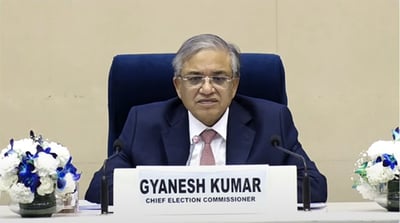
The political landscape in West Bengal has been thrust into turmoil as the Congress party officially challenges the recent election results, labeling them a manufactured verdict. Spokesperson Pawan Khera has alleged that the Special Intensive Revision (SIR) of voter lists was used as a tool for large-scale disenfranchisement. According to the party’s claims, over 89 lakh voters were removed from the rolls, a figure that represents roughly 11 percent of the state's electorate. The core of the grievance lies in 50 specific assembly seats where the Congress and other opposition members claim the number of deleted voters far exceeds the final margin of victory, suggesting that the outcome was skewed by administrative interference.
This controversy centers on the SIR process, which the opposition describes as a targeted exclusion of specific demographics. Investigations into the data suggest that voter deletions were not uniform across the state, with higher concentrations of removals found in Muslim-dominated border areas and specific urban belts. In constituencies like Samserganj, nearly 91,000 voters were reportedly struck off the list. The Congress argues that this was not a routine administrative cleanup but a strategic "tinkering" designed to disadvantage the ruling party’s opponents. By taking this matter to the Supreme Court, the party is seeking a directive for fresh polls in affected areas and a thorough audit of the electoral rolls to restore public confidence.
The implications of these allegations are profound, as they strike at the heart of the democratic process in one of India’s most politically volatile states. If the court finds merit in the argument that voter deletions were politically motivated, it could set a massive precedent for how electoral lists are managed nationwide. The Election Commission and the BJP have denied these allegations, maintaining that the revision was a transparent and necessary exercise to remove duplicates and deceased voters. However, the simulation of voter data suggests that even a minor percentage of these deletions, if they belonged to a specific voting bloc, could have completely flipped the results in dozens of seats, making the "margin vs. deletion" argument a potent legal weapon.
Ultimately, this legal battle represents a critical test for the institutional integrity of the electoral system. The demand for repolls in 50 seats is an unprecedented call for corrective action that could redefine the legislative balance in West Bengal. While the ruling party views the SIR as a victory for "clean" rolls, the opposition views it as a "digital booth capturing" method. The outcome of the Supreme Court's intervention will determine whether the current results stand or if the state must prepare for a massive electoral do-over. Regardless of the legal result, the trust between the electorate and the administrative machinery has been severely strained, necessitating a transparent resolution to ensure the legitimacy of the state's leadership.