
12 Dead, 13 Still Trapped After Suspected Methane Explosion In Sikkim Tunnel; Toll May Rise
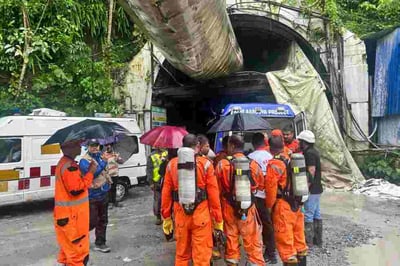
Deep inside the dark mountain passages of Namchi district in South Sikkim, a regular workday turned into a nightmare on July 20, 2026. Around 25 workers were busy drilling through rock layers at the Adit 3 section of the Head Race Tunnel for the 500 megawatt Teesta Stage VI Hydroelectric Project near Samardung village. Suddenly, around 1.04 pm, a massive underground explosion shook the entire structure, shattering rock walls and instantly filling the enclosed passage with thick dust and deadly smoke. The sudden blast trapped 25 laborers deep inside the mountain, nearly 1.5 kilometers away from the tunnel entrance. 2 workers who happened to be working closer to the outer arch managed to run toward safety with minor injuries, but the remaining workforce was completely swallowed by falling debris and blinding smoke. Within hours, authorities confirmed that 12 workers had died at the scene, while 13 individuals remained trapped in the dark depths, with emergency officials warning that the overall casualty count may rise further as search efforts progress.
The tragedy triggered an immediate multi agency rescue effort, but reaching the trapped workers has proven to be an extraordinarily dangerous mission. Specialized units from the National Disaster Response Force, State Disaster Response Force, Sikkim Police, and Fire Services rushed to Samardung, joined by an expert mining safety squad from Eastern Coalfields Limited in West Bengal. However, initial teams that entered the damaged passage were forced to pull back after experiencing severe dizziness and breathing troubles due to lethal concentrations of carbon monoxide, methane, and hydrogen sulfide gas lingering inside the enclosed shaft. Rescuers wearing heavy breathing apparatus and protective oxygen equipment could only operate in brief 15 minute shifts before needing fresh air at the entrance. To make matters worse, continuous rainfall outside caused waterlogging and mud deposits that sealed portions of the escape route, forcing specialized mining experts to clear thick slurry while constantly monitoring volatile gas levels.
The heartbreaking impact of this disaster reaches far beyond the quiet valley of Namchi, as families across several Indian states wait desperately for news of their missing loved ones. The deceased and trapped workers include brave migrant laborers who traveled from West Bengal, Assam, Punjab, Uttarakhand, and local towns in Sikkim to support their families back home. 7 of the recovered bodies have been identified so far, including workers like Babul Borodalai from Assam and Vikey Rawat from Uttarakhand. Prime Minister Narendra Modi and Sikkim Chief Minister Prem Singh Tamang both assessed the situation on July 21, 2026, expressing deep grief over the loss of innocent lives. The state administration announced an ex gratia financial payment of 4 lakh rupees for the families of each deceased worker along with 50 thousand rupees for the injured, while an additional 2 lakh rupees was sanctioned from the Prime Minister National Relief Fund. A high level inquiry committee has also been formed to investigate the exact sequence of events that led to the fatal explosion.
Engineering assessments from project developer National Hydroelectric Power Corporation indicate that the explosion was likely caused by a localized pocket of trapped methane gas, commonly known as firedamp, embedded within ancient rock formations. As heavy tunneling machinery drilled through the young and fractured Himalayan rock strata, the cutter head hit a pressurized underground gas pocket, releasing volatile methane that ignited upon encountering mechanical sparks. Standard geological surveys conducted before tunnel excavation typically test for rock density, fault lines, and water channels, but standard surface tests are unable to detect odorless, colorless methane trapped under intense pressure inside deep rock pockets. This disaster highlights the extreme vulnerability of undertaking large scale underground construction across the seismically active and fragile Eastern Himalayas. Building massive infrastructure in regions where young rock layers contain unpredictable pockets of natural gas requires far more advanced real time gas monitoring systems, automatic ventilation shafts, and continuous underground sensors to protect human lives before drilling machines strike hazardous geological traps.
As search teams continue working through the night under difficult conditions, family members gathered near the project gate keep their eyes fixed on the tunnel mouth, clinging to hope for any sign of survival. Specialized heavy machinery is currently being deployed to clear mud barriers and pump fresh air deeper into the cavern, allowing rescue personnel to extend their search zones. While the immediate priority remains recovering the trapped workers and providing top quality medical treatment to those injured, this tragedy serves as an urgent wake up call for infrastructure development in mountainous terrains. Striking a careful balance between clean energy projects and strict worker safety standards is essential for the future. Implementing mandatory pre drilling gas drainage protocols, compulsory wearable multi gas detectors for every miner, and safer emergency evacuation chambers can ensure that those who labor deep within the earth to build the nation power supply return home safely to their families every day.