
19m Supreme Court Quashes Hate Speech Case Against Rahul Gandhi Over Savarkar Remarks
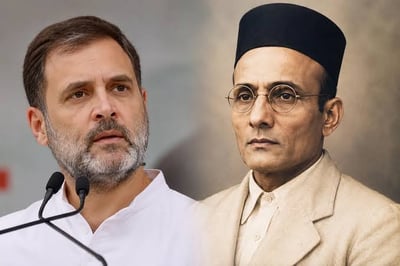
The Supreme Court of India delivered a significant legal victory to Leader of Opposition Rahul Gandhi by quashing a criminal complaint and subordinate court summons issued against him over remarks targeting Hindutva ideologue Vinayak Damodar Savarkar. A division bench comprising Justice Dipankar Datta and Justice Sheel Nagu set aside the ongoing proceedings in a magistrate court in Lucknow, concluding that the entire trial was legally unsustainable due to procedural non-compliance.
The origin of the legal dispute dates back to comments made by Gandhi during a public rally in Akola, Maharashtra, held as part of the nationwide Bharat Jodo Yatra. During his address, Gandhi referred to Savarkar as a collaborator who had submitted letters to colonial authorities offering himself as a servant of the British administration in exchange for a pension. Following the public address, advocate Nripendra Pandey filed a private complaint in a Lucknow court accusing the Congress leader of making deliberate, inflammatory statements aimed at inciting social disharmony and defaming a historic national icon.
The Lucknow magistrate subsequently found a prima facie case against the Congress MP, issuing summons under Sections 153A and 505 of the Indian Penal Code. These provisions penalize actions that promote enmity between different social groups and public mischief, respectively. Gandhi challenged the magistrate's decision before the Allahabad High Court, which declined to quash the complaint and directed him to seek revisional remedies in the lower trial courts instead. Gandhi then escalated the legal challenge to the top court, seeking relief against the criminal proceedings.
During the proceedings before the Supreme Court, the division bench focused strictly on statutory mandates laid down in procedural criminal law. Under Section 196 of the Code of Criminal Procedure, prior sanction from the central or relevant state government is an absolute legal prerequisite for any court to take official cognizance of offences charged under Section 153A of the IPC. When questioned directly by the bench regarding the status of this mandatory approval, representative counsel for the state of Uttar Pradesh admitted that no sanction had ever been granted to prosecute Gandhi.
Addressing both the state counsel and the original complainant in court, the bench observed that the lack of statutory sanction brought an immediate end to the prosecution. The judges remarked that where statutory sanction is mandatory by law, the total absence of such permission renders the underlying criminal complaint void, leaving no room for the trial to move forward. Consequently, the Supreme Court ruled in favor of Gandhi, setting aside the summons and closing the criminal case outright.