
Aamir Khan Meets Raj Thackeray At Shivtirth In Mumbai As Nephew Imran Khan Fights Leave India Notice In Bombay High Court
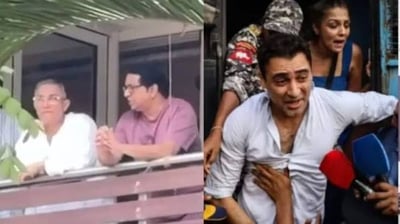
A high-profile meeting between prominent figures from the film industry and regional politics has captured public attention across Mumbai. Bollywood superstar Aamir Khan visited Maharashtra Navnirman Sena leader Raj Thackeray at his private residence, Shivtirth, located in the Shivaji Park area of Dadar. The unexpected visit unfolded during an ongoing legal crisis involving Aamir Khan's nephew, actor Imran Khan, who has approached the Bombay High Court after immigration authorities ordered him to leave the country. While both personalities have maintained long-standing personal warmth, the timing of their interaction has sparked widespread interest across political and entertainment circles.
Aamir Khan arrived at the political leader's home accompanied by his wife, Gauri Spratt, for what was described as a private visit. The two prominent figures have maintained a cordial friendship spanning several years, frequently attending each other's family celebrations and milestone events. Neither Aamir Khan nor Raj Thackeray released an official statement detailing what was discussed behind closed doors. However, the meeting taking place at the exact moment when his family faces a sensitive immigration dispute has led many observers to wonder whether the legal challenge facing Imran Khan was part of the conversation.
The legal trouble for Imran Khan began following his public participation in a political demonstration at the historic August Kranti Maidan in Mumbai. The rally was organized in solidarity with ongoing protests challenging Chief Election Commissioner Gyanesh Kumar over alleged discrepancies in the Special Intensive Revision of electoral lists. Imran Khan attended the gathering alongside his partner Lekha Washington to express support for democratic transparency. During the gathering, local police stepped in to detain participants, briefly taking the actor into custody before letting him go.
The demonstration quickly turned into a major political flashpoint after former parliamentarian Kirit Somaiya formally complained to the Mumbai Police, questioning how a foreign national could take an active part in domestic political rallies. Although Imran Khan was raised in India, studied in Indian schools, and built a successful acting career in Hindi commercial cinema, he holds United States citizenship through birth. He resides in India under an Overseas Citizen of India registration card, commonly called an OCI card. The public complaint quickly brought his legal immigration status into sharp administrative scrutiny.
Following the inquiry, the Foreigners Regional Registration Office and the Mumbai Police served Imran Khan with a formal legal directive under the provisions of the Immigration and Foreigners Act. The official notice instructed the forty-four-year-old actor to pack his belongings and leave Indian territory by the twenty-eighth day of the month of October. Authorities cited legal sections that empower the central government to restrict the movement of foreigners or remove foreign passport holders from the country if their conduct is seen as violating immigration conditions or national regulations.
Faced with the prospect of deportation from the country where he lives and works, Imran Khan moved swiftly to challenge the government order before the Bombay High Court. In his detailed court petition, the actor described the order to leave India as an unconstitutional, harsh, and heavy-handed abuse of government authority. He asked the court to quash the notice completely and grant an immediate interim stay so that police authorities cannot take coercive steps against him while the case remains under judicial review.
The legal petition argues that holding an Overseas Citizen of India card gives individuals the legal right to live, work, and express peaceful opinions in the country. Imran Khan's legal team has pointed out that neither the primary immigration law nor the official rules framed under it place an explicit ban on OCI holders attending peaceful public gatherings. His petition seeks legal protection against being placed on travel lookout notices, being blacklisted from returning to India, or having his long-term residency privileges cancelled without fair legal procedure.
The broader political context in Maharashtra adds another dimension to Aamir Khan's visit to Shivtirth. In recent weeks, Raj Thackeray himself has publicly voiced criticism regarding the working methods of the Election Commission and raised questions about electoral fairness. Because the political leader has shown a willingness to challenge election authorities, observers noted the interesting overlap between Thackeray's public stance and the very protest that landed Imran Khan in legal difficulty. However, whether political assistance was sought or whether the visit was simply a courtesy between old friends remains unconfirmed by both sides.
The legal dispute touches on a significant question regarding the rights of overseas Indian cardholders. The Overseas Citizenship of India scheme was introduced to allow people of Indian origin holding foreign nationality to maintain lifelong connections with their ancestral homeland, granting multiple-entry visas and property rights. However, the law does not grant voting rights or equal constitutional protection compared to full Indian citizens. How the High Court decides Imran Khan's plea could establish an important legal precedent clarifying the exact political and civic rights of millions of overseas Indians living and working in the country.
The matter is set to be heard by the Bombay High Court in the coming days, with the departure deadline drawing near. While the legal teams prepare their courtroom arguments, the public and the film industry continue to watch both the courtroom developments and the family's diplomatic interactions with keen interest.