
Bhojshala-Kamal Maula Verdict: Muslim Leaders To Move Supreme Court; Will Faith Override Facts?
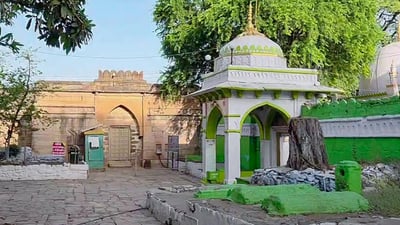
The ongoing judicial dispute over the Bhojshala Kamal Maula Mosque complex in Dhar, Madhya Pradesh, has reached a critical turning point following a comprehensive ruling by the Indore Bench of the Madhya Pradesh High Court. The division bench legally declared the protected monument to be a temple dedicated to Goddess Vagdevi Saraswati, effectively dissolving the long standing April 2003 reciprocal arrangement established by the Archaeological Survey of India. Under that previous directive, Hindu devotees were permitted to perform rituals on Tuesdays, while the Muslim community offered Friday prayers. In a bid to provide an equitable resolution, the High Court included a specific recommendation suggesting that the Muslim side could approach the Madhya Pradesh state government to secure an alternative piece of land within the Dhar district to construct a new mosque. However, this proposal was instantly rejected by local community heads and legal representatives, paving the way for an immediate appeal before the Supreme Court of India.
The legal strategy of the Muslim side heavily rests upon crucial administrative and state documents dating back to the pre independence era. Senior legal counsels representing the community presented an official proclamation known as an Ailaan issued by the erstwhile princely state court of Dhar on August 24, 1935. This document, which functioned as a legal gazette notification during the British Raj under the Bhopal Agency, explicitly recognized and declared the disputed monument as a mosque, ordering that daily prayers should continue uninterrupted. Furthermore, historical evidence submitted to the court includes archival British government records and early twentieth century gazetteers. Reports compiled by British officers like Captain E. Barnes in 1904 and early writings by colonial administrators explicitly classified the structure as a ruined mosque, traditionally known to locals as a place of Islamic worship associated with the medieval Sufi saint Kamal Maula.
Adding substantial weight to the opposition, All India Majlis-e-Ittehadul Muslimeen President Asaduddin Owaisi issued a strong public statement criticizing the verdict as deeply flawed. Owaisi emphasized that the complex has operated as a legally recognized Waqf by dedication, where Muslims have been offering continuous prayers for over 700 years. He argued that the High Court completely overlooked primary factual evidence, including the 1935 Dhar State Gazette, the formal 1985 Waqf registration records, and the foundational statutory protections guaranteed under the Places of Worship Special Provisions Act of 1991. By drawing parallels to the structural arguments utilized in the historic Ayodhya judgment, community leaders express deep concern that relying purely on archaeological excavations to override centuries of continuous possession sets an unsettling legal precedent for minor religious properties across the nation.
This escalating situation presents a complex dilemma for the Indian judicial system, as ancient structural origins discovered during scientific surveys increasingly clash with modern property deeds and statutory freezes on religious sites. While Hindu organizations celebrated the decree as a validation of their faith and historical legacy, the local administration has placed Dhar city under heavy security deployment to prevent any public order issues. Legal experts suggest that the upcoming Supreme Court review will be crucial, as the apex court must balance the findings of the modern archaeological report against the validity of century old princely state decrees and constitutional protections. With the Muslim side actively compiling their petition, the ultimate status of this historical monument now rests upon how the highest court interprets property rights versus historical architectural transformations.