
Bhutan Rejects Indias Ethanol E20 Petrol Supply Offer
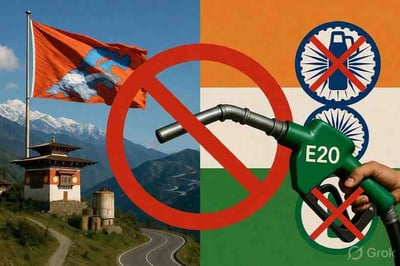
The ambitious green energy push by India has encountered a unique geological and infrastructural hurdle right across its border. Bhutan has officially declined an offer from major Indian state owned oil marketing companies, including Indian Oil Corporation Limited, Bharat Petroleum Corporation Limited, and Hindustan Petroleum Corporation Limited, to import E20 petrol. The fuel, which consists of a 20 percent ethanol blend mixed with 80 percent conventional petrol, is being rolled out rapidly across Indian pumps to reduce reliance on crude imports. However, the Bhutanese Department of Trade has issued a firm refusal, requesting instead that India maintain the supply of traditional, unblended petrol for as long as it remains available in the export market. Local distributors, including Tashi BOD, have highlighted that the primary problem does not stem from environmental opposition, but rather from severe practical challenges tied to storage and vehicle performance on steep Himalayan roads.
The driving scientific reason behind this rejection relates to the distinct chemical behavior of ethanol. Unlike standard petrol, ethanol contains a hydroxyl group that makes it highly hygroscopic, meaning it aggressively absorbs and binds with moisture from the atmosphere. Bhutanese officials have openly pointed out that many of their underground fuel storage tanks are old and subject to groundwater seepage due to the rugged, high humidity mountain climate. If E20 petrol is introduced into these vulnerable containers, the fuel will instantly draw in the moisture, causing a chemical reaction known as phase separation where the fuel splits into separate layers of water ethanol mix and petrol. This reaction dilutes the fuel and turns the liquid visibly milky, rendering it highly destructive to automotive engines. For a landlocked nation completely dependent on stable fuel transport networks, introducing a highly sensitive biofuel into an unequipped infrastructure presents an immediate economic and logistical hazard.
Beyond the threat of storage contamination, the physical geography of the region plays a decisive role in this diplomatic energy refusal. Vehicles navigating the steep, challenging Himalayan terrain demand maximum torque, optimal acceleration, and highly consistent engine output. Because ethanol possesses a lower energy density than pure fossil fuel, it fails to deliver the same combustion power, triggering concerns that vehicles will struggle on intense mountain inclines. Furthermore, domestic automobile workshop data from the region indicates that vehicles manufactured prior to 2023 are not chemically compatible with high ethanol concentrations. Forcing the transition without modification would lead to severe internal corrosion of steel fuel lines, clogged injectors, and rapid degradation of fuel pumps, saddling ordinary vehicle owners with additional annual maintenance costs ranging from 5000 to 10000 rupees for specialized fuel additives and frequent repairs.
This situation exposes a critical reality in cross border energy cooperation, demonstrating that rigid environmental mandates cannot simply be copy pasted into regions with completely different infrastructural capacities. While the Indian domestic market forces a rapid transition to absorb lower mileage and handle minor engine adjustments for long term macroeconomic gains, Bhutan relies heavily on high export quality fuels to keep its transport sector alive. The Himalayan nation has made it clear that a complete overhaul of its fuel network, including the installation of fully leak proof transport systems and entirely new underground tanks, must happen before any biofuel adoption can be considered. They have requested Indian suppliers to give clear advance warnings if unblended petrol options are ever phased out, ensuring that the country has ample time to protect its citizens from sudden vehicle breakdowns and massive financial strain.