
Delhi High Court Gives Green Signal To CJP Protest In Connaught Place: Why Does The Modi Government Not Want Students To Lehra Do Tiranga?
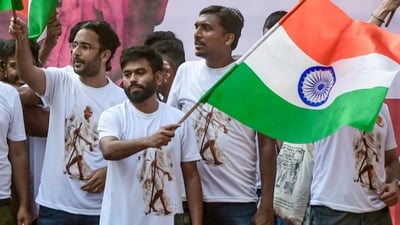
The Delhi High Court has refused to stop a public gathering organized by the Cockroach Janta Party at the iconic Central Park in Connaught Place. Local market associations and commercial vendors had urgently knocked on the doors of the court, warning that hosting a large crowd in the heart of the city would bring traffic to a crawl and hit shopkeepers hard right before the festive weekend rush. However, the judicial bench declined to impose a blanket stay on the planned assembly. Instead, the judges recorded formal assurances from the Delhi Police stating that strict security and crowd regulation measures will be implemented on the ground to prevent any disruption to shoppers, businesses, and traffic movement.
The legal push against the event began early in the day when senior counsel representing local traders mentioned the plea for immediate listing before the Acting Chief Justice. The petitioner argued that Connaught Place is a bustling shopping hub, not an authorized public demonstration site. Counsel pleaded that store owners were already staring at massive business losses as security checks began disrupting footfall during a peak retail period. When the court examined the state response later in the afternoon, government law officers stated that police forces were fully equipped to oversee the venue. Satisfied with the formal undertaking given by law enforcement, the bench declined to entertain demands for an outright injunction.
The upcoming demonstration is the latest escalation in a bitter standoff surrounding public anger against the Chief Election Commissioner, Gyanesh Kumar. The Cockroach Janta Party and its founder, Abhijeet Dipke, issued a widespread public call urging citizens to bring the national flag and assemble under the slogan Lehra Do Tiranga. The call was triggered after two prominent members of the outfit, Saurav Das and Ashutosh Ranka, were taken into custody and remanded for attempting to wave the tricolor at Jantar Mantar. The outfit insisted that holding the national flag and demonstrating love for the motherland cannot be treated as a crime under Indian law.
Police authorities, however, justified locking away the two activists by claiming they had violated peace bonds and unlawfully entered Jantar Mantar, which has recently been removed from the list of authorized demonstration zones. The administration maintained that legal protocols and peace bonds must be strictly enforced regardless of the cause. The heavy response against youth activists holding the tricolor has triggered sharp criticism from student unions, rights bodies, and opposition parties, who claim that executive power is being used arbitrarily to suppress basic expressions of patriotism.
The crackdown has sparked a direct political question across civil society: Why is the Modi government so determined to save Chief Election Commissioner Gyanesh Kumar from public scrutiny and allegations of election fraud? For weeks, university students, civil rights defenders, and opposition groups have organized marches accusing the Election Commission of deliberate voter list deletions and massive irregularities in electoral administration. Yet, instead of ordering an independent inquiry into these voter fraud complaints, central agencies and the Delhi Police have clamped down aggressively on demonstrators, hauling student leaders into lockups and deploying sweeping barricades. Observers argue that shielding the top election officer at all costs points to an administration terrified that deeper scrutiny will uncover major electoral wrongdoing.
The heavy policing has led many to ask why the authorities are so eager to stop students from hoisting the Indian flag. While government leaders frequently promote national flag campaigns across the country, law enforcement agencies treat students waving the exact same flag as lawbreakers when it is done to demand electoral accountability. Critics argue that the administration welcomes the tricolor only when it serves official public relations, but moves quickly to suppress it whenever young citizens raise the flag to challenge state abuse or demand institutional transparency.
Meanwhile, legal representatives handling the defense of the detained activists have complained about deliberate administrative delays at police stations. Lawyers alleged that local officials used bureaucratic excuses to delay releasing the arrested youths even after valid surety papers and bail paperwork were processed. Defense advocates maintain that keeping citizens in detention over bailable allegations is an outright denial of constitutional rights, pointing out that administrative red tape is increasingly weaponized to wear down young demonstrators.
The court ruling to let the gathering proceed under police observation highlights the shrinking space for democratic assembly in the capital. With traditional protest locations like Jantar Mantar increasingly blocked or restricted by the administration, young citizens and protest groups are turning to prominent open public spaces to make their voices heard. While the High Court declined to endorse an outright ban, the strict police cordons and heavy security around Connaught Place reflect an administration determined to keep public dissent under tight executive control.