
Delhi Police ACP Manasvi Vashishta suspended after leading street protest outside police headquarters over lawyer clash
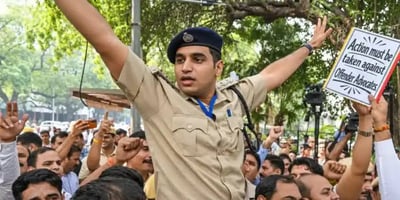
High drama unfolded in the heart of the national capital as the Union Home Ministry ordered the immediate suspension of Assistant Commissioner of Police Manasvi Vashishta. The severe disciplinary action came after the senior officer led hundreds of uniformed and plainclothes police personnel in an open demonstration right outside the Delhi Police Headquarters. The gathering brought work to a standstill outside the main building as junior and mid level officers shouted slogans, demanded fair treatment, and protested against the sudden transfer of their colleagues. Senior police authorities took a serious view of the gathering, declaring that a disciplined police force cannot take to the road like political demonstrators to question official department decisions.
The public demonstration on Monday, November 2, 2026, started with a group of nearly one hundred police personnel and quickly swelled to over five hundred officers as the morning progressed. Standing on the pavement outside the central office on Jai Singh Road, the gathering held placards, raised slogans of unity, and demanded a direct meeting with Delhi Police Commissioner Anurag Kumar. ACP Vashishta addressed the crowd directly, arguing that field officers feel unprotected when facing angry groups during their daily duty. The protesting officers insisted that higher authorities had surrendered to pressure from lawyers by punishing police staff without conducting a fair inquiry into what really happened.
The entire conflict began with a petty neighborhood dispute outside a local hair cutting salon in Rohtash Nagar in east Delhi on October 23, 2026. An argument over car parking between a local lawyer named Lalit Bansal and the salon owner quickly turned into a physical fight. Both sides suffered minor injuries, and word of the fight spread fast among local legal circles. Within a short time, dozens of advocates rushed to the Shahdara police station, demanding the immediate arrest of the salon owner and claiming that their colleague was attacked without any reason.
The situation inside the Shahdara police station quickly spiraled out of control as angry shouting matches broke out between duty officers and the visiting advocates. Police personnel stated that the group of lawyers pushed their way into private investigation rooms, shouted at duty staff, and created major disorder inside the station building. In the scuffle that followed, one practicing lawyer suffered a bleeding head wound. The visiting lawyers accused ACP Vashishta and Station House Officer Arun Kumar of beating them, using dirty language, and even pointing an official service gun at them to force them out of the building.
The injury to the lawyer triggered furious reactions across all major district courts in Delhi. Bar associations in Tis Hazari, Patiala House, Karkardooma, Rohini, Saket, and Dwarka immediately called for an indefinite work boycott. Thousands of legal professionals stayed away from courtrooms, shutting down thousands of daily legal hearings, bail applications, and property disputes across the capital. Leaders of the Bar Council met with top government figures, insisting that they would not step back into court halls until criminal cases were registered against the police officers and both the ACP and the station house officer were thrown out of their posts.
Hoping to restore peace and convince the striking lawyers to return to work, top police officials took quick action by transferring both ACP Vashishta and Station House Officer Arun Kumar to non sensitive posts outside the Shahdara district. However, this administrative step caused deep anger among the lower ranks of the police force. Constables, head constables, and field sub inspectors felt that senior bosses had sacrificed on duty officers just to please the legal community. Many officers expressed fear that if they cannot defend their own police stations from aggressive visitors, they will have no authority left to protect ordinary citizens on the streets.
The anger reached a boiling point when off duty officers decided to gather outside the headquarters to make their voices heard. During his speech before the crowd, ACP Vashishta stated that police personnel do not want violence, but they need clear rules and legal security when dealing with hostile crowds. The officers highlighted that while lawyers have powerful associations to protect their interests, ordinary police personnel have no trade union or formal platform to present their grievances when they face physical attacks or false allegations while doing their duty.
The Union Home Ministry and top police commanders viewed the demonstration as a dangerous breach of force discipline. Officials pointed out that the police department is an armed, disciplined service responsible for guarding the law of the land. If uniformed men and women assemble on public roads to question their own leadership, it ruins public confidence in the police force and damages the basic chain of command. The suspension order was signed within hours of the demonstration, stripping ACP Vashishta of his powers and starting a formal internal inquiry into his conduct.
The ugly confrontation has once again exposed the long standing bad blood between the police force and the legal community in Delhi. Similar violent clashes have taken place in past years, most notably in 2019 when violent fights broke out inside the Tis Hazari court complex over vehicle parking, leading to torched police vehicles and public strikes by both groups. Legal experts point out that both police personnel and court lawyers work inside the same criminal justice system every day, and constant fighting between them only hurts ordinary citizens who wait years for justice.
Senior citizens and neighborhood groups across Delhi have voiced deep concern over the breakdown of order between law enforcers and court officers. While the strike by lawyers leaves thousands of undertrial prisoners waiting helplessly in jail cells, public protests by police personnel raise questions about who will maintain street safety. Civil society members are urging both the government and the judiciary to create a permanent joint committee to solve disputes between cops and advocates through calm dialogue instead of street brawls and courtroom strikes.