
Delhi Ramlila Maidan INDIA Bloc Rally Leaves Behind Mud, Littered Streets, And Political Slogans
Delhi historic Ramlila Maidan presented a completely changed picture after thousands of political workers packed the ground for the massive INDIA bloc gathering. The loud speeches from the high stage, the continuous clapping from the crowd, and the waving of colorful party flags slowly came to an end. Once the massive crowd began to walk out toward the main gates, the true condition of the ground became visible to everyone standing nearby. What remained behind was a vast sea of discarded water bottles, food boxes, torn banners, and thick brown mud that turned normal walking into an everyday struggle.
The recent unseasonal rainfall in the capital city had already made the open ground wet and soft before the event even started. As thousands of people walked back and forth from early morning hours, the soil broke down completely and turned into deep, slippery clay. People who came wearing clean clothes and fresh shoes found themselves stepping very carefully, balancing on their toes and trying not to slip into the slush. Many attendees joked among themselves that walking across the open field looked less like a political rally and more like an unintended fashion walk across a muddy track.
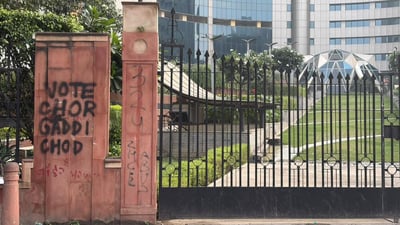
Along the boundary walls, iron gates, and nearby road dividers, strong political messages stood out clearly in fresh paint. Bold spray-painted slogans reading Vote Chor caught the eye of every passerby and local commuter driving through the central Delhi roads. These painted words reflected the intense political mood of the gathering inside, where opposition leaders strongly attacked the government over the arrest of political figures and the conduct of national elections. Long after the microphones were turned off and the vehicles carrying leaders drove away, those black and red painted words remained firmly stamped across public surfaces.
The surrounding roads leading away from the venue suffered equally heavy disorder throughout the afternoon. Discarded plastic packets, empty soft drink cans, used cups, and thousands of single-use plastic water bottles covered both sides of the footpaths and clogged the road corners. Although dustbins were present at a few selected spots, the sheer number of visitors quickly filled them beyond their actual capacity. Empty plastic bottles ended up rolling across the road every time a heavy bus or police van drove past the entrance gates, creating a messy sight right in the heart of the national capital.
In the middle of this widespread mess, an entirely different human story unfolded on the ground. Several local waste-collectors and ragpickers, who live in nearby working-class colonies, arrived with large white plastic sacks slung over their shoulders. Interestingly, some of these waste-pickers had actually sat through the rally as supporters, listening quietly to the speeches from the edges of the crowd. When the public started leaving, these men and women immediately bent down and began picking up discarded water bottles and scrap metal from the wet earth to earn a basic daily living.
For these informal waste workers, a mega political gathering is both an event of high public interest and a rare chance to earn essential income. One waste-picker, moving with quick hands through the slushy grass, explained that picking clean plastic bottles from political grounds provides enough recyclables to feed a family for a couple of days. While regular participants hurried to reach metro stations and avoid getting their trousers dirty, these workers walked straight into the deepest patches of muck, hunting for every single empty container they could find before municipal trucks arrived.
Local shop owners and tea stall operators located outside the outer perimeter had mixed reactions to the scene. Small vendors selling hot tea, roasted snacks, and cold water experienced brisk sales from the morning hours, earning much higher profits than usual. However, once the gathering ended, the front areas of their small stalls were buried under paper cups and polythene packets. Several shopkeepers took out long bamboo brooms to clean their own doorsteps, complaining that big political events always create a huge cleanup burden for common local residents who have to deal with the leftover trash.
Traffic across nearby central roads came to a slow crawl for several hours as the event concluded. Commuters trying to cross between Old Delhi and New Delhi faced long delays, with buses, three-wheelers, and private cars stuck behind crowds of departing workers. Traffic police officers stood at major intersections, blowing whistles and waving their arms to clear blocked lanes. The combination of waterlogged road edges, scattered garbage, and hundreds of hired transport buses parked along the main avenues created severe bottlenecks that took hours to normalize.
Cleaning staff from the municipal corporation were eventually deployed in batches to begin the massive cleanup operation. Armed with heavy brooms, garbage shovels, and large transport carts, sanitation staff worked tirelessly under the afternoon sun to lift tons of wet trash. The task was particularly difficult because wet paper plates and food waste had mixed thoroughly with wet mud, making manual lifting heavy and slow. Senior municipal workers noted that clearing an open ground after a political rally of this size usually takes a full day of non-stop hard labor.
Events at Ramlila Maidan have historically marked major turning points in the political journey of the country, from anti-corruption protests to historic election rallies. Yet, behind the grand national messages, bold political promises, and passionate debates, the reality on the ground always returns to basic civic challenges. The leftover graffiti, the damaged green patches, and the enormous mountain of plastic waste highlight the persistent gap between public political participation and basic civic discipline in our cities.
As the sun began to set over the sprawling ground, the loud echoes of political slogans faded away into the regular evening noise of city traffic. The high metal stage stood silent, surrounded by wet grounds and tire tracks left behind by heavy sound trucks. The political leaders had moved on to television studios and press conferences, leaving behind an empty, mud-stained venue where only tired municipal sweepers and persistent waste-collectors remained, slowly picking up the pieces of an eventful day.