
Dollar Out India and Japan Move to Launch Direct Yen Rupee Trade Network
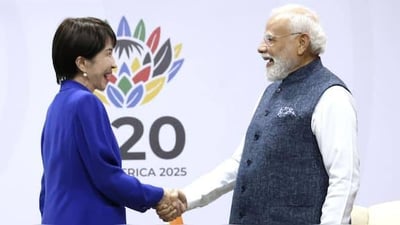
The global financial landscape is witnessing a massive shift as India and Japan prepare to completely bypass the US dollar in their bilateral business transactions. During the highly anticipated 16th India-Japan Annual Summit in New Delhi, Prime Minister Narendra Modi and his Japanese counterpart Sanae Takaichi are expected to formally introduce a direct yen rupee trade settlement framework. This major development, first reported by Nikkei Asia, could find its place in the official joint statement of the two leaders. The planned mechanism will allow Japanese businesses to open special non-resident accounts directly with Indian banks. By eliminating the necessity of an intermediate global currency like the US dollar, both Asian giants aim to drastically reduce foreign exchange conversion fees, lower remittance costs, and speed up cross-border payments for thousands of enterprises.
This strategic move comes at a time when both nations are desperate to safeguard their economies from global financial shocks. Bilateral trade between India and Japan reached an impressive 27.5 billion dollars in the 2025-2026 fiscal year, making financial efficiency a top priority. Currently, businesses from both countries lose significant portions of their profits to currency conversion fees because they must first convert local currencies into US dollars before completing a transaction. Under the new arrangement, a Japanese automotive firm or an Indian tech supplier can invoice and settle payments directly in yen or rupees. This initiative builds directly on the economic roadmap established in the 2025 Japan-India Joint Vision, elevating their relationship to a highly integrated financial partnership.
However, looking at the arrangement with a deeper lens reveals certain operational hurdles that both nations must address to make this system truly effective. While the framework promises great relief from exchange rate volatility, the persistent trade imbalance remains a major issue. Japan currently exports significantly more to India than it imports, which means Indian banks could end up holding an overabundance of Japanese yen, while Japanese banks might face a shortage of Indian rupees. A similar local currency system launched by Japan with Indonesia reached 7.7 billion dollars in 2025, showing that these frameworks can succeed if managed properly. For India, the Reserve Bank of India will need to ensure that surplus balances can be easily reinvested into government securities to keep the capital productive, preventing the funds from sitting idle.
Ultimately, this monetary shift is about much more than just saving money on corporate transactions. It is a bold geopolitical statement indicating that major Asian economies are actively working to de-dollarize their commercial supply chains. By establishing direct financial channels, New Delhi and Tokyo are insulating their mutual economic interests from Western banking dependencies and unilateral trade sanctions. This system will also provide immense confidence to the 1400 Japanese companies operating within India, especially those heavily invested in large infrastructure projects like the mega Mumbai Ahmedabad high-speed rail corridor. As the final technical details are ironed out between the Reserve Bank of India and the Japanese Ministry of Finance, this economic shield will likely redefine the balance of financial power across the Indo-Pacific region.