
Don't blame Ethanol. Nitin gadkari and his sons are Raja Harishchandra and 25 crore bikers are liars ?
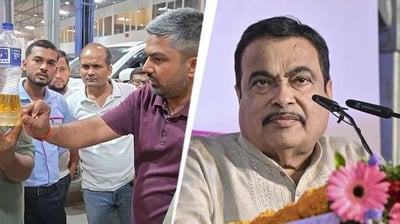
The massive nationwide debate surrounding E20 petrol took a dramatic turn on 12 July 2026, when India most followed daily YouTuber, Sourav Joshi, uploaded a video showing his premium Mercedes Benz SUV fuel efficiency crashing down from 17 kmpl to just 5 kmpl within 48 hours. Joshi directly pointed fingers at the ethanol blended petrol available at local filling stations, expressing panic over sudden engine damage and expensive repair bills. His viral claims instantly struck a chord with millions of vehicle owners across the country who have been experiencing similar drop in fuel economy, sending shockwaves across social media platforms like X and Instagram. The public outrage forced an immediate response from German automaker Mercedes Benz India, which rushed to issue an official advisory clarifying that all its BS6 vehicles are fully compliant and safe to run on E20 fuel blends.
Following the public uproar, Union Minister for Road Transport and Highways Nitin Gadkari firmly stepped in to dismiss the panic, stating that citizens cannot measure exact fuel efficiency based on moving dashboard numbers alone. Gadkari challenged critics to show concrete proof of a single vehicle that sustained structural mechanical failure solely because of the fuel blend. Interestingly, shortly after the government and manufacturer statements, Sourav Joshi deleted the controversial segment from his vlog and released a formal apology on 13 July 2026, stating that the drop in mileage was actually caused by an internal mechanical engine issue discovered during a service center visit. Despite this quick retraction, the massive online debate has not slowed down, as common motorists continue to question whether their daily driving costs are rising quietly due to the mandatory green energy shift.
A deeper look into the situation reveals a growing friction between the government aggressive green energy targets and the ground reality faced by average daily commuters. Policymakers strongly defend the Ethanol Blended Petrol program because it has saved the nation over 190000 crore rupees in expensive foreign exchange crude imports while actively boosting the rural sugar economy and helping local farmers. However, the official stance that ethanol causes a negligible 3 to 5 percent reduction in efficiency is frequently challenged by real world independent test drives where older or non compliant vehicles show much larger drops in mileage. While top officials look at macro economic benefits, the common man is left to deal with the immediate impact of reduced driving range per full tank, creating a clear communication gap between state policy and consumer satisfaction.
The entire controversy highlights that pushing for a cleaner environment should go hand in hand with transparent consumer education and choice. Trust cannot be built by simply dismissing public complaints as false online narratives when the economic burden of lower fuel economy falls directly on the pockets of ordinary citizens. If the transition to E20 fuel is to succeed completely without constant public backlash, the government must ensure strict quality checks at fuel pumps to avoid adulteration while encouraging manufacturers to assist with parts replacement. For now, the sudden change in the stance of the vlogger might have given temporary relief to policymakers, but the core doubts of 25 crore vehicle owners regarding actual mileage and long term engine health remain unanswered.