
Ebola Crisis 2026 India Issues Urgent High Alert and New Guidelines to States After WHO Global Emergency Declaration
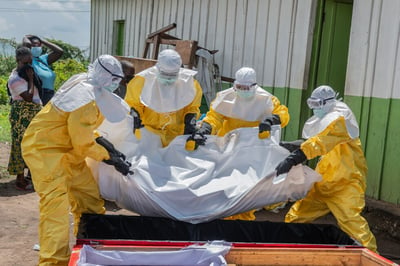
The global health landscape has shifted into high alert following the official announcement by the World Health Organization designating the recent Ebola outbreak in Central Africa as a Public Health Emergency of International Concern. In immediate response to this threat, the Central Government of India has issued a comprehensive directive to all States and Union Territories, demanding an immediate escalation in defensive measures and healthcare readiness. Union Health Secretary Punya Salila Srivastava led a high-level review meeting to establish strict monitoring networks, making it clear that while no cases of the virus have been recorded within Indian borders, proactive prevention is absolutely mandatory. The threat is compounded by the fact that the current outbreak, spreading through the Democratic Republic of Congo and Uganda, is driven by the rare Bundibugyo strain, for which there are currently no widely approved vaccines or specific antiviral treatments.
To insulate the population from potential cross-border transmission, the Ministry of Health has officially circulated a detailed Standard Operating Procedure to every state health department. This emergency protocol establishes rigorous mechanisms for disease surveillance, sample collection, safe storage, and rapid referral pathways for any suspected individuals. The Integrated Disease Surveillance Programme has been activated nationwide to track and investigate unusual clusters of unexplained fever or associated symptoms such as severe headache, muscle pain, vomiting, and external bleeding, particularly among people returning from high-risk countries. Furthermore, the Directorate General of Health Services has mandated strict pre-arrival and post-arrival health declarations at all major international entry points, requiring travelers from affected regions to report to airport health officers immediately before attempting immigration clearance.
From a structural standpoint, the domestic strategy focuses heavily on immediate isolation and rapid diagnostic verification to contain potential friction points before they expand. States are now under strict orders to earmark dedicated isolation facilities within major government hospitals and position specialized ambulances equipped with advanced infection prevention and control systems. On the diagnostic front, the Indian Council of Medical Research National Institute of Virology in Pune has been designated as the apex laboratory for processing high-risk samples, supported by a broader network of regional labs being prepared for rapid testing scaling. Frontline healthcare workers, rapid response teams, and airport screening staff are also receiving rapid training updates regarding clinical management, contact tracing, and biomedical waste disposal to minimize any chance of institutional exposure.
This rapid administrative response highlights the delicate balance between necessary public health caution and the threat of unintended economic or social disruption. By implementing such detailed protocols well before a single case touches domestic soil, the government effectively utilizes lessons learned from past global health crises to prevent national panic and secure international supply chains. However, the true success of this preventative framework rests heavily on the operational efficiency of local state machinery and the level of coordination maintained between municipal health workers and central border authorities. If local tracking systems remain sharp and public communication remains transparent without causing undue alarm, India stands well-positioned to successfully defend its borders against this evolving global biological challenge.