
France Erupts in Street Clashes Over Living Costs and Police Brutality: Macron Vows Retribution as 1,200 Arrested Nationwide'
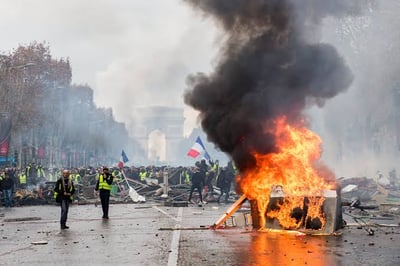
France is witnessing one of its biggest waves of public anger in recent memory. Roads across major urban centers turned into scenes of chaos as local citizens and security personnel faced off for hours. Thousands of ordinary men and women took to public squares to show their anger over unaffordable food items, high power bills, and unfair treatment by security personnel. Peaceful marches quickly lost order as small crowds fought directly with security officers. What started as a collective call for affordable living and fair treatment turned into broad street trouble that has shaken the whole country.
The disturbances began in Paris before spreading quickly to other big centers such as Marseille, Lyon, Toulouse, and Nantes. Crowds assembled in popular city squares holding large banners that called for immediate price cuts on daily items and an end to tough police treatment. While daytime events stayed largely peaceful, the situation changed quickly when night arrived. Groups set fire to rubbish bins, public bus shelters, and parked cars. Store windows along commercial streets were broken, and business owners suffered heavy property damage. Firefighters had a hard time reaching burning locations because roadblocks made from metal barriers and burning debris blocked the path.
President Emmanuel Macron addressed the public from the presidential office, strongly condemning the destruction of city property and attacks against emergency services. The head of state promised strict punishment for everyone caught breaking the law or assaulting public servants. He said the administration will not tolerate street violence and announced that security forces will receive full backing to restore peace in every town. President Macron explained that while people have every democratic right to hold peaceful gatherings, burning public property and injuring officers cannot be tolerated. He warned that anyone taking part in riots will face legal trials without exception.
Security departments stated that more than 1,200 people were arrested across the country. Holding cells in the capital and nearby towns were packed as police worked without break to question suspects. Judges started fast-track hearings for individuals caught carrying dangerous items, setting street fires, or stealing goods from broken stores. Tens of thousands of officers were sent to clear blocked roads and secure public buildings. Security teams fired tear gas shells and used strong water cannons to push back violent groups who threw heavy stones, glass bottles, and loud fireworks at police barriers.
The main push behind this large public movement is the heavy weight of everyday costs on ordinary households. For many months, normal families across the country have found it hard to pay for basic goods. Prices for grocery staples, cooking fuel, and car petrol have climbed higher than ever before. Workers say their monthly pay is finished long before the month ends. Retired workers, students, and low-wage employees shared their struggles in public, saying they cannot manage warm heating during cold weather or provide three full meals each day for their children. Many express deep anger because they feel top leaders only assist rich corporate bosses while ignoring the difficulties of regular citizens.
Another serious reason for the unrest is growing outrage over heavy-handed action by local police. Friction between young residents and patrol teams has been a difficult issue for years, especially in the poorer suburbs surrounding big French cities. Short video clips shared on online platforms showed security officers pushing unarmed people to the ground and swinging sticks at protesters. These videos spread fast among the youth, sparking strong anger and sympathy for the injured. Community representatives argue that young people from humble neighborhoods face non-stop identity checks, rude remarks, and rough treatment from patrol teams on daily duty.
Business owners and local traders in town centers have suffered major monetary setbacks. Many shopkeepers arrived in the morning only to find their display glass shattered, cash boxes stolen, and inventory taken. Trade groups representing small businesses announced that the cost of repairing broken storefronts will reach millions of euros. Tourism is also facing big trouble, with travel agencies noting that many foreign travelers have cancelled their room bookings out of safety worries. Important public museums closed their gates before regular hours, and transit managers stopped evening train and bus operations across multiple cities to keep transport staff and travelers away from flying stones.
Political leaders across parliament have used these dramatic events to present opposing views. Left-wing leaders placed the blame on the central government, stating that official financial policies are crushing poor citizens while offering tax perks to big companies. They pointed out that public anger is an expected outcome when authorities turn a blind eye to peaceful public demands. In contrast, right-wing lawmakers called for a much tougher response, demanding a formal state of emergency and calling for armed troops to guard high streets and government buildings.
Civil rights groups have appealed to both security leaders and demonstrators to avoid further violence. Rights monitors published official warnings against using crowd-control weapons that can cause lasting bodily harm to unarmed demonstrators. They also demanded an independent review into how police units handled the crowds during the opening hours of the marches. Meanwhile, local city mayors and neighborhood leaders have asked young people to stay at home, reminding them that damaging public buses, neighborhood schools, and local libraries only hurts the working families who use these services every day.
The French government has begun urgent cabinet discussions to find a quick resolution to the public crisis. Top officials are examining relief measures that could include direct financial help for poorer homes, price controls on basic electricity, and clearer guidelines on police tactics during large demonstrations. Even so, protest organizers insist that simple promises will not satisfy the public. With major trade unions preparing for wider industrial action that could stop rail travel, fuel distribution, and schools, the country faces a tense period before calm returns to the streets.