
How The Adani Jaypee Takeover Highlights A Decade Of Infrastructure Monopolization Under Modi Since 2014
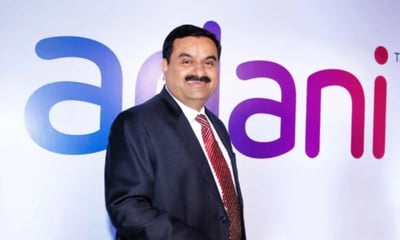
The Indian corporate world just witnessed another massive shift as the 5700 crore acquisition of Jaiprakash Associates by the Adani Group officially entered its final operational phase. To ensure everything runs smoothly, a special monitoring committee has been formed to oversee the transfer of major power, cement, and fertilizer assets. Under this structured transition, Adani Power is spending nearly 2994 crore to buy a 24 percent stake in Jaiprakash Power Ventures alongside another 1200 crore for the Churk thermal power plant. At the same time, the group is expanding its reach into agricultural infrastructure by acquiring Kanpur Fertilizers for 1500 crore. This complex resolution plan, which was recently approved by the National Company Law Tribunal, shows how a single conglomerate can step into a heavily indebted company and absorb its critical parts, ensuring the lights stay on while expanding its own market footprint.
This massive acquisition is not a random business deal but rather the latest chapter in a long running playbook that started a decade ago. Following the political shift in 2014 when Prime Minister Narendra Modi came to power, the Indian economic landscape changed dramatically. Before 2014, this corporate group was primarily known as a successful regional infrastructure player focused heavily around the ports of Gujarat. However, the subsequent ten years saw a breathtaking national expansion. By strategically aligning its corporate goals with the infrastructure development targets of the central government, the group systematically entered almost every sector that keeps India moving. From shipping ports and major airports to solar energy fields, coal mines, gas distribution pipelines, and massive cement manufacturing units, the scale of this rapid expansion has no parallel in modern Indian history.
Looking closely at this growth model reveals a highly sophisticated strategy of picking up stressed national assets and leveraging regulatory frameworks. When the government introduced the Insolvency and Bankruptcy Code to clean up bad bank loans, it opened a goldmine of opportunities for cash rich groups. Stressed giants like the Jaypee Group, who were struggling under thousands of crores of debt, became easy targets for consolidation. Furthermore, when the government decided to privatize several state owned airports in 2019, the bidding rules allowed this single conglomerate to win long term leases for six major regional airports, followed quickly by a majority stake in Mumbai International Airport. While this centralized strategy brings massive corporate efficiency, state of the art technology, and rapid project execution to struggling public utilities, it also raises undeniable questions about economic concentration. Having a single private entity control a dominant share of the nation's maritime trade, air travel, and domestic energy supply creates a situation where the country becomes deeply reliant on the financial stability of one corporate family.
In conclusion, the latest 5700 crore deal demonstrates that the momentum of India infrastructure consolidation is not slowing down anytime soon. The creation of a dedicated monitoring committee proves that both regulators and lenders are fully supportive of handing over the keys of debt heavy companies to proven operators who can manage them. For everyday citizens and market watchers, this decade long evolution presents a fascinating paradox. On one hand, India is getting world class roads, upgraded airports, and reliable power grids managed by a highly capable domestic giant that recently cleared major international regulatory hurdles. On the other hand, the sheer speed at which smaller competitors have been absorbed since 2014 means that India economic future is now deeply intertwined with a single mega conglomerate, creating an era of unprecedented corporate centralization.