
Hyderabad Building Rules 20 Feet Plot Width Restriction Faces Public Protests Leading Government to Ease Old Property Permissions
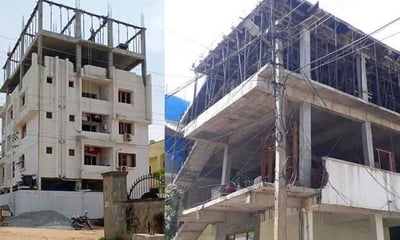
Owning a small plot of land and constructing a peaceful family home represents the greatest lifetime dream for millions of ordinary working people. Families save their earnings rupee by rupee for decades, cut down on everyday comforts, and take loans to purchase modest plots in residential neighborhoods. For many generations living in traditional city colonies, these plots represent their only family wealth and emotional security. However, when municipal planning authorities suddenly introduce rigid new technical measurements, regular homeowners often find their building plans rejected overnight. A wave of intense anxiety recently swept through small landowners and property builders across Hyderabad when municipal guidelines made a minimum 20 feet plot width mandatory for granting house construction permits.
The restrictive rule caught thousands of small landholders completely off guard. Across historic city pockets, older layouts, and dense suburban localities, countless plots naturally measure between twelve and eighteen feet in width. These narrow dimensions were created decades ago when ancestral properties were divided equally among brothers and sisters, or when low income buyers purchased small parcels to fit their limited savings. When municipal authorities began rejecting construction permission files purely because the front width did not reach the new twenty foot mark, middle class families felt trapped and helpless. Many families had already demolished crumbling ancestral rooms or spent money on architectural drawings, only to discover that municipal computer portals blocked their applications completely.
As frustration grew into public anger, protests began erupting across civic offices and municipal corporation headquarters. Citizen associations, small property owners, local trade bodies, and independent real estate builders organized rallies and community meetings to voice their opposition. They argued that applying modern suburban dimensions to long settled historic settlements was fundamentally unfair and disconnected from ground realities. Small builders pointed out that thousands of day laborers, masons, carpenters, and electricians were losing daily wages because construction work on smaller residential plots had come to a complete standstill. People demanded to know how low income citizens could afford to buy wider plots when real estate prices had already climbed beyond reach.
Elected representatives from various constituencies also began feeling the heat from their voters. Local ward leaders and legislative members were flooded with complaints from distressed constituents who could neither renovate their damaged houses nor construct an extra floor for growing children. Hearing these serious public grievances, political leaders took up the matter directly with municipal administration ministers and town planning directors. They urged the state leadership to take a compassionate, practical view and modify the harsh restrictions before small plot owners suffered permanent financial ruin.
Recognizing the genuine distress of regular citizens, the government stepped forward with crucial policy relief. Municipal administration authorities announced an important relaxation specifically targeted at older properties and long existing layouts. Under the revised guidelines, plots situated in older registered colonies, unauthorized layouts regularized under government schemes, and ancestral lands documented before specific cut off dates will receive special exemptions from the rigid twenty foot width rule. Municipal planning officers have received clear instructions to process building permission files for these established smaller properties without placing unfair obstacles in their way.
The government decision to ease permissions has brought immense relief to thousands of waiting families. Homeowners who were stuck paying heavy monthly interest on home building loans while waiting endlessly for technical clearances can now move forward with construction. Contractors and construction workers have started returning to building sites in established neighborhoods, reviving local economic activity for cement dealers, hardware shops, and skilled artisans. Neighborhood residents expressed gratitude that public voices were heard and that common sense prevailed over rigid bureaucratic red tape.
City planners and urban experts note that managing a fast growing metropolitan hub like Hyderabad requires a delicate balance between safety standards and human realities. Municipal authorities originally introduced the width restrictions with the intention of improving fire truck access, encouraging better air circulation between buildings, and preventing overcrowded, unsafe vertical developments. While those planning ideals are important for newly planned satellite townships, forcing the same rules onto centuries old urban settlements creates severe hardship for native residents who have lived in those neighborhoods for generations.
The recent controversy also highlights the need for ongoing reforms in municipal governance. Property experts suggest that town planning departments must conduct wider public consultations with citizen groups before implementing sweeping regulatory changes. Using digital platforms to streamline approval processes is helpful, but the software rules must remain flexible enough to accommodate traditional, irregular, and narrow plot shapes that exist across older Indian cities.
By stepping in to ease building rules for older residential plots, the state leadership demonstrated responsive governance that respects the basic rights of small property owners. For a common person, having the legal freedom to build a secure shelter on their own land is not just a commercial matter, but a question of personal dignity and family safety. As municipal offices reopen regular approvals for narrow plots, families across Hyderabad can once again lay bricks, build walls, and fulfill their long cherished dream of having a home of their own.