
IDBI Bank Employees Plan Two Day Nationwide Hunger Strike Against Proposed Fairfax Takeover And Privatisation
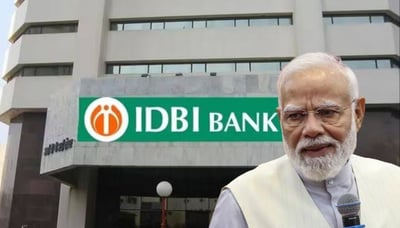
A major confrontation is brewing across India banking sector as thousands of workers and officers preparing to serve at IDBI Bank decided to launch a powerful nationwide protest. The employees have formally announced a two day hunger strike to register their fierce opposition against the proposed sale of the lender to foreign investment firm Fairfax Financial Holdings. The decision to stop taking food during working shifts reflects the rising frustration among banking professionals who fear that handing over management control to a private buyer will erase the public service foundation of their financial institution.
The call for the nationwide demonstration comes from the United Forum of IDBI Officers and Employees, a joint body representing both managerial staff and clerical personnel. The union has formally issued a legal strike notice under labor codes, making it clear that workers across branches and offices throughout the country will participate in the protest. Bank staff plan to observe the hunger strike on November 2 and November 3, turning branch gates and office entrances into gathering spots for peaceful demonstration. Union leaders pointed out that while staff will remain at their desks and service counters, refusing meals during work is their way of showing their deep distress to the government and the general public.
At the very core of this dispute is the long running plan by the central government to sell off its ownership stake in IDBI Bank. Under the proposed transaction, the government together with the Life Insurance Corporation of India intends to dilute their joint shareholding and transfer full management control to Canada based Fairfax Financial Holdings. In response, bank staff are demanding an immediate halt to this takeover plan. The employee forum wants the central government to buy at least a six percent additional stake from LIC or the open market so that state ownership stays at a minimum of fifty-one percent, preserving the public sector identity of the lender.
To support their argument, the protesting unions have drawn attention to promises made decades ago inside the Indian Parliament. Union representatives pointed out that during parliamentary discussions in December 2003, government leaders gave an explicit assurance that the central administration would always retain majority ownership in the bank. The employees argue that walking away from those solemn parliamentary promises breaks faith with the workforce and goes against the original goals set when the institution was established to support national industrial growth.
Beyond ownership numbers, the workers are fighting to protect their personal job security, fair wages, and retirement benefits. Employees have spent years working under public sector wage agreements and pension systems that guarantee financial safety for their families. They are now demanding clear legal guarantees in writing that their service conditions, healthcare assistance, pension rights, and affirmative action reservation policies will not be diluted under private ownership. The union has also stated that if the privatization goes through anyway, existing employees must be given the fair choice to transfer to other public sector banks with their seniority, pay scales, and retirement benefits fully protected.
The employees also raised deep worries about the fate of temporary workers who keep branches running every single day. Modern bank branches rely heavily on contractual office helpers, security guards, and outsourced computer support staff who often work for low wages without strong safety nets. The employee forum is actively demanding that all outsourced and contract workers currently serving in IDBI Bank be absorbed into regular permanent positions rather than being shown the door when a new private corporate owner takes control of operations.
Another major reason driving the anger among staff is the remarkable financial turnaround that IDBI Bank achieved through the hard labor of its workforce. Only a few years ago, the lender was struggling under mountains of bad loans and strict corrective restrictions placed by the central banking authority. Rather than collapsing, the employees worked tirelessly to recover stuck loans, improve customer service, and bring the bank back to strong profitability. Workers find it unjust that the government chose to keep the bank when it was suffering losses, only to hand it over to a private buyer now that it is posting healthy quarterly profits and operating steadily.
Union leaders are also framing their protest as a fight to protect everyday customers, farmers, and small business borrowers. Public sector lenders play a crucial role in providing cheap crop loans to rural families, setting up bank accounts for low income citizens, and disbursing government welfare money without looking only at corporate profit margins. The union cautioned that once a foreign private firm assumes full control, priority lending for rural agriculture and small street businesses could easily take a back seat to high margin commercial loans and corporate fees, hurting vulnerable borrowers who rely on state backed banking.
On the government side, officials and economic planners have continued to defend the privatization drive as a necessary step for economic modernization. The Finance Ministry and disinvestment authorities have maintained that neither previous court rulings nor older legislative changes prevent the government from selling its stake to suitable private investors. Policy experts supporting the sale argue that bringing in experienced private capital and modern global technology will make the lender more competitive, reduce financial burdens on state coffers, and strengthen the overall banking industry in the long run.
The impending strike has naturally raised concerns among regular account holders, retail depositors, and business clients who depend on IDBI Bank for daily transactions. While the unions have clarified that the protest is a hunger strike aimed at highlighting their demands rather than an immediate complete shutdown of branch operations, widespread participation by officers and clerks could still slow down counter services, delay check clearances, and affect document processing across branches nationwide on protest days. Union leaders have openly appealed to bank customers, fellow trade unions, and civil society groups to understand their plight and stand with them in solidarity.
The employee forum has stated that it remains completely open to sitting down for honest negotiations with bank management and central government officials to find an amicable path forward. However, union representatives have also issued a stern warning that if their legitimate demands for ownership retention and job security continue to be brushed aside, they will have no choice but to step up their agitation into a prolonged and indefinite strike across the country.
As the scheduled protest dates draw closer, the unfolding struggle at IDBI Bank has evolved into a key test case for India disinvestment policy. It puts the government push for corporate privatization directly against the collective voice of thousands of bank workers who are willing to go hungry to protect their public bank. How the government responds to this planned nationwide hunger strike will not only decide the fate of IDBI Bank and its workforce, but will also send a clear signal about the future of public sector enterprises across the entire country.