
IMF Urges Rupee Flexibility As Central Bank Defends Local Currency From Global Oil Shocks
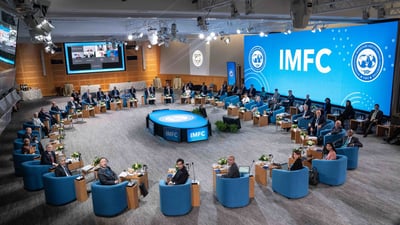
Global financial watchdogs have entered the spotlight with clear advice for emerging economies dealing with turbulence in international markets. A high-ranking official from the international monetary institution recently pointed out that trying to control currency value through heavy foreign-exchange interventions only works for a very short time. Instead, nations facing outside economic pressures should let their exchange rates move naturally to absorb unexpected global shocks.
This advice arrives as the national central bank steps up efforts to protect the local currency. Financial markets have been facing heavy strain driven by surging global oil prices and money moving out of domestic assets into safer foreign havens. When crude oil prices climb globally, countries that import most of their energy needs face immediate trouble. More dollars are required to buy the same amount of oil, which naturally pushes down the value of the local currency and increases domestic inflationary pressures.
To fight this sudden slide, monetary authorities have deployed several creative strategies. Aside from direct market interventions, policy measures included easing rules for foreign borrowing and creating attractive deposit schemes targeted at overseas citizens to bring in billions of dollars. Furthermore, tax cuts on foreign investments in government bonds helped pull back much-needed capital, giving the local currency a vital cushion without completely draining official reserves.
These defensive actions managed to pull the local currency back up by a notable margin after it hit near-record lows. Market watchers noted that these steps also coincided with the first interest rate hike seen in nearly four years, showing how seriously policymakers view the combined threat of a sliding currency and expensive energy. Even so, financial experts maintain that deploying central bank reserves to artificially prop up currency value is like putting a temporary bandage on a deep wound.
Looking at the broader economic picture, international reviews highlight that overall domestic demand and service sectors remain strong. Growth projections stay steady, yet the global environment remains fragile due to volatile food and energy costs. Allowing exchange rates to fluctuate serves as an economic shock absorber, preventing the heavy depletion of foreign reserves that might be needed more crucially elsewhere during prolonged global crises.
Ultimately, balancing the trade-off between currency stability and reserve preservation remains a delicate task for policymakers. While direct action offers breathing room during panics, long-term economic resilience depends on allowing markets to adjust organically. As global energy dynamics continue to shift, finding the right equilibrium between tactical intervention and flexible market movement will define financial stability moving forward.