
India Disappointment With Donald Trump Grows as Crucial US Midterms Approach
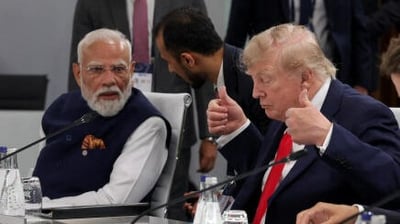
Warm smiles and loud stadium cheers that once defined the close relationship between Indian Prime Minister Narendra Modi and American President Donald Trump have turned into quiet disappointment across government circles in New Delhi. A few years ago, the leaders held hands in front of massive crowds and celebrated what looked like an unbreakable bond between two major powers. Today, policy experts in the Indian capital believe that friendship has hit rough ground, as harsh trade fights, shifting security positions, and unexpected demands from Washington have damaged trust between the two capitals.
A major factor behind this sour mood is trade. The American administration has repeatedly pushed hard on Indian exports, raising tax duties on goods made in India and demanding deeper access into domestic farming and dairy markets. For Indian negotiators, protecting local farmers and small businesses has always been a red line that cannot be crossed. As Washington introduced punishing border tariffs, trade talks stalled, leaving business leaders in both nations frustrated and unsure about future commerce deals.
Energy purchases have added another heavy layer of friction to the relationship. India has consistently bought crude oil from international markets, including Russia, to keep petrol prices manageable for hundreds of millions of low-income and middle-class households. While Indian officials have explained that these energy imports are strictly driven by national interest and energy security, the White House has placed heavy diplomatic pressure on New Delhi to stop those purchases. Indian leaders have pushed back, making it clear that a country of over one billion people cannot sacrifice its fuel supplies to fit another nation’s foreign plans.
Security calculations in South Asia have also troubled Indian strategic planners. New Delhi has grown uncomfortable with recent friendly overtures between Washington and Pakistan, as well as business connections forming between regional players and associates tied to American leadership circles. For decades, Indian foreign policy has worked hard to ensure that Washington stays clear-eyed about cross-border security threats in the subcontinent. Seeing sudden shifts in attention has revived old worries that long-term security partnerships can be set aside for quick, transactional arrangements.
Immigration and work rules represent another painful sticking point for regular citizens. Thousands of skilled Indian tech engineers, doctors, and students move to the United States every year to work and study. Tougher visa restrictions and unpredictable policy changes have created immense uncertainty for Indian families and technology companies that depend on smooth international travel. Instead of feeling valued as partners in global innovation, many young professionals feel caught up in internal political battles far from home.
Diplomats in New Delhi have noticeably changed how they talk about the American leadership. In earlier years, Indian ministers openly expressed confidence that changes in the White House would never shake the core foundation of mutual cooperation. Today, that easy confidence has given way to caution and public pushback. Indian diplomats have broken with their traditional habit of keeping disagreements private, speaking out more plainly against unfair economic pressure and unpredictable foreign policy turns.
Because of these growing differences, observers in India are watching the congressional midterm contests in the United States with sharp interest. Analysts say leaders in New Delhi hope a balanced or divided Congress might act as a natural check on sudden executive moves. A stronger opposition inside American legislative committees could introduce more regular debate, slow down sudden tariff decisions, and force administration officials to return to structured, predictable diplomacy.
Despite the current chill, long-term strategic links between the two democracies remain broad and essential. Both nations continue to share deep concerns about stability in the Indo-Pacific region and work together in security groups like the Quad alongside Japan and Australia. Military drills continue, and defense equipment sharing remains active. Yet, the personal enthusiasm that once promised an effortless partnership has faded into a realistic understanding that common words do not always translate into friendly deeds.