
Indonesia Ferry Fire Tragedy Rescuers Search For 28 Missing Off Madura Island
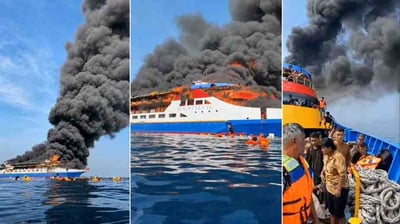
A devastating maritime disaster unfolded in the Java Sea on August 2, 2026, when a major fire broke out aboard the passenger ferry KM Mutiara Sentosa 2 off the coast of Madura Island in East Java province. The 160 meter vessel was carrying 271 people, including 232 passengers and 39 crew members, alongside 181 heavy vehicles and cargo trucks, while traveling from Tanjung Perak Port in Surabaya toward Makassar in South Sulawesi. Between 6 and 7 in the morning, thick plumes of suffocating black smoke began pouring from the lower vehicle decks. Witnesses aboard reported that the inferno likely originated from a transport truck before high sea winds swept the flames rapidly across the decks. In less than 30 minutes, panic spread through the vessel as terrified passengers wearing life jackets scrambled toward the bow and upper bridge to escape the intensifying heat. The vessel captain managed to broadcast a desperate distress call to maritime authorities before communication went completely dark, leaving the ship engulfed in flames about 19 nautical miles north of Buruan Sapudi Island.
The emergency response turned into a race against time as passing commercial vessels and national rescue agencies rushed to the burning ferry. Cargo ships operating near Sumenep regency were among the first to reach the scene, pulling dozens of panicked travelers directly out of the water after many jumped overboard to escape the advancing fire. However, initial rescue operations faced severe hazards because nearby vessels carrying flammable cargo were unable to dock alongside the inferno, forcing smaller tugboats and patrol craft to pick up survivors from the open sea. High waves and rough weather temporarily forced smaller inflatable rescue boats to return to shore, delaying early evacuation efforts. By August 3, 2026, joint rescue teams consisting of the National Search and Rescue Agency, local maritime police, and the Indonesian Navy managed to safely evacuate 238 survivors to the Port of Gapura Surya Nusantara in Surabaya, while confirming 5 tragic deaths. An intensive search operation continues for 28 individuals who remain unaccounted for across a 10 mile search radius.
At the Port of Gapura Surya Nusantara in Surabaya, emotional scenes unfolded as anxious families gathered at emergency reception centers awaiting news of their missing relatives. Discrepancies between official passenger manifests and the actual number of individuals on board have significantly complicated accounting efforts. Rescue officials have noted that unrecorded travel companions and unmanifested cargo drivers frequently create gaps in official records, forcing search teams to rely heavily on direct statements from surviving crew members and waiting family members. Authorities have deployed 7 specialized vessels, including a naval corvette, high speed patrol boats, and a search helicopter to scour surrounding waters. Search commanders confirmed that the active operation will run for an initial duration of 7 days, with provisions to extend the maritime search for up to 14 additional days until every missing person is accounted for.
This tragic incident highlights persistent, structural vulnerabilities within regional maritime transportation systems across the Indonesian archipelago. As a nation comprising over 17000 islands, affordable sea transit remains an essential lifeline for millions of everyday citizens moving between major economic hubs like Java and Sulawesi. However, the rapid spread of fire originating on the vehicle deck raises critical questions regarding fire detection systems, cargo inspection protocols, and safety enforcement aboard aging passenger vessels. The vessel, originally built in 1992, had been operating under Indonesian registration since 2015. The swift escalation from a vehicle deck fire to a complete vessel takeover within 30 minutes indicates potential gaps in early suppression infrastructure and emergency containment procedures. Without rigorous enforcement of passenger manifests, strict vehicle fuel safety checks, and modernized firefighting equipment on long distance routes, the reliance on ocean transit continues to expose domestic travelers to severe risks during emergency situations at sea.