
Internal Rift Explodes as NCP SP Leaders Push for BJP Alliance While Veteran Sharad Pawar Resists Ruling Coalition Entry
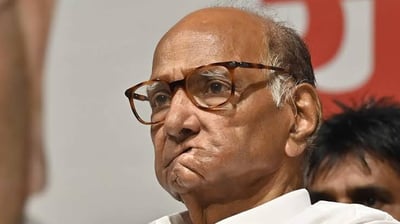
The internal stability of the Maha Vikas Aghadi opposition alliance experienced severe friction on July 16, 2026, when a significant internal rift within the Nationalist Congress Party Sharadchandra Pawar, or NCP SP, became completely public. Senior organizational leaders, spearheaded by state unit chief Jayant Patil and key legislator Jitendra Awhad, have initiated internal discussions pushing the party to align with the Bharatiya Janata Party led National Democratic Alliance. This surprising shift materialized through a series of closed door meetings, including a significant 60 minute session between the top opposition figures and Deputy Chief Minister Eknath Shinde in Mumbai. Sources within the state legislature confirmed that Jayant Patil explicitly informed the remaining 10 party MLAs that securing an alliance with the ruling side remains the most practical method to ensure long term organizational survival. This aggressive internal push marks a massive deviation from the official public posture of the group, which has spent the past two years presenting itself as the primary ideological challenger to the ruling establishment in Maharashtra.
The structural cause behind this widening internal divide stems directly from the deep connection between regional political survival and the control of local economic networks. A vast majority of the elected NCP SP representatives maintain direct ownership or heavy operational influence over cooperative sugar factories, regional dairy unions, and rural credit societies, particularly across the prosperous sugar belt of western Maharashtra. Remaining outside the central and state administrative power circles for an extended period poses a direct threat to these essential cooperative networks, leaving them highly vulnerable to aggressive regulatory scrutiny and financial blockades by central investigative entities. While younger legislators argue that joining the government would instantly secure massive development funds and protect their regional voter bases, the 85 year old party patriarch Sharad Pawar remains completely unyielding. The veteran leader has historically initiated and dropped similar backchannel discussions with national ruling entities in 2014, 2017, and 2019, ultimately choosing to protect his secular regional identity rather than accepting subordinate roles within a centralized coalition.
This localized political friction carries massive consequences for national legislative calculations, particularly regarding high stakes constitutional amendments. The central government is actively seeking external issue based cooperation to pass the highly contentious Delimitation Bill and the unified One Nation One Election framework. The NCP SP currently commands a crucial block of 8 Lok Sabha members and a newly re elected Rajya Sabha member in Sharad Pawar himself, making their parliamentary voting behavior immensely valuable to the national managers of the ruling party. National Working President Supriya Sule recently triggered intense speculation by visibly softening her traditional resistance toward the Delimitation Bill, indicating that the party might consider supporting the treasury benches if specific state level conditions are met. However, entering into a formal alliance with the ruling front would require a complete ideological reversal that threatens to alienate their urban progressive voters and create immense structural tension with their current alliance partners, the Congress and the Uddhav Thackeray led Shiv Sena faction.
As the internal pressure intensifies, the ultimate resolution rests entirely on whether the veteran leader can successfully pacify his ambitious second tier leadership without sacrificing his lifelong political legacy. Publicly, front line spokespersons continue to issue strong denials, labeling the widespread reports as deliberate misinformation campaigns designed by rivals to confuse ordinary voters ahead of critical municipal selections. Nevertheless, senior leaders from partner opposition parties have openly acknowledged the reality of these backchannel communications, warning that choosing short term ministerial berths over long term ideological commitments could severely damage the credibility of the progressive movement across the state. With the legislative session progressing rapidly, the unfolding struggle between immediate survival instincts and deep rooted anti establishment politics will conclusively dictate the future path of the regional outfit.