
Is BCI Chairman Pro BJP Move Behind NALSAR Enrolment Ban Row
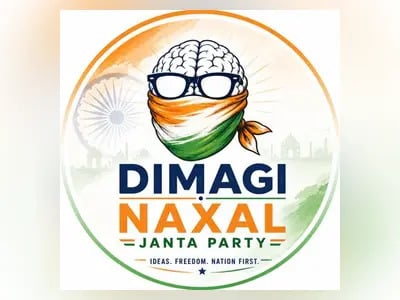
The phrase Dimagi Naxal has taken the center stage of Indian national politics after an unexpected development on social media. Days after Prime Minister Narendra Modi used the term during his annual Independence Day address from the ramparts of the Red Fort, a new profile carrying the name Dimagi Naxal Janta Party has surfaced on platform X. The handle operating under the username DNJP India has swiftly drawn the attention of political observers, commentators, and digital media audiences nationwide. What started as a sharp political phrase has now transformed into a full-scale digital movement and online talking point.
The new social media handle appears intentionally curated to engage with prominent critics of the ruling administration. The profile currently follows 13 specific accounts across public life. Among those on its following list are key opposition leaders including Leader of the Opposition in Lok Sabha Rahul Gandhi, Samajwadi Party chief Akhilesh Yadav, and Aam Aadmi Party national convener Arvind Kejriwal. Alongside these political figures, the account tracks several high-profile digital commentators, comedians, and independent journalists, including Dhruv Rathee, Kunal Kamra, Mohammed Zubair, Arpit Sharma, Shyam Meera Singh, and Tarun Gautam, as well as satire handles such as Rofl Gandhi 2.0 and Cockroach Janta Party.
Public engagement on the handle began almost immediately as it started amplifying critical viewpoints on political discourse. In one of its early activities, the profile shared a statement by actor Prakash Raj. The post encouraged citizens to maintain an analytical approach to governance and society, emphasizing the importance of questioning authority rather than accepting directives without inquiry. Alongside such posts, the account shared its own mission statement declaring that its weapons are thoughts and its purpose is a revolution of ideas, signing off with national slogans.
The digital emergence comes directly in the wake of sharp exchanges between the government and the opposition. The controversy was sparked when the Prime Minister warned against elements operating with an intellectual Naxal mindset. The statement drew swift reactions from senior opposition figures. Congress leader and former Union Minister P Chidambaram responded directly to the remarks, publicly stating that he took pride in being identified with critical thinking and intellectual questioning. The exchange quickly escalated into a wider debate on free speech, political dissent, and national security definitions.
Addressing the growing row, Union Minister for Parliamentary Affairs Kiren Rijiju stepped forward to clarify the government stance on the phrase. He stated that the remarks by the Prime Minister were never intended to target mainstream opposition political parties. According to the Union Minister, the description was specifically directed at individuals and groups that actively align with banned Maoist ideologies, reject the Constitution of India, support separatist agendas, advocate for the return of Article 370, or promote geographical division such as rhetoric surrounding the strategic Siliguri Corridor in the Northeast.
The ongoing digital and political confrontation highlights how fast modern political rhetoric migrates from official podiums to online platforms. As opposition members and political observers continue to interact with the new profile, the phrase has evolved from an official warning into a political symbol. The development demonstrates the growing role of satirical and thematic digital campaigns in shaping public narrative during major political disagreements in the country.