
Madhya Pradesh Reconstitutes State Waqf Board With Hindu Members For First Time Under New Act
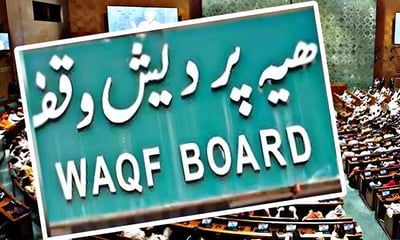
In a landmark administrative move, the Madhya Pradesh government has officially reconstituted its state Waqf Board, making it the very first state level body in the country to include non Muslim members. A formal gazette notification issued on Sunday confirmed the appointment of Sanwar Patel as the chairman of the newly structured 10 member board. Chief Minister Mohan Yadav approved the sweeping changes following the implementation of the fresh legislative guidelines under the Waqf Amendment Act 2025. According to senior state officials, the reshuffle was executed by exercising specific executive powers conferred under Section 13 1 and Section 14 of the structural framework. The key inclusion of Manoj Malpani from Indore and Animesh Bhargava from Raghogarh in Guna district as the two Hindu representatives marks a significant departure from traditional administrative compositions seen in religious property boards across India.
The primary legal responsibility of this statutory body is to oversee, register, and safeguard extensive Waqf properties spread across various districts of Madhya Pradesh, ensuring their revenues are strictly utilized for designated religious, educational, and social welfare initiatives. By adding diverse administrative voices into the core decision making panel, the state government aims to bring a higher degree of structural transparency and public accountability to the management of these public assets. Alongside the newly appointed chairman and the two Hindu members, the 10 member panel features several prominent public figures, including former Union Minister Najma Heptulla, local legislators, and municipal councillors from Indore, Ujjain, and Bhopal, while the Commissioner of the Backward Classes and Minority Welfare Department will serve as an ex officio member to monitor daily compliance.
This policy shift reflects a broader national transition toward reforming long standing structural bodies and addressing persistent complaints regarding land encroachment and lack of transparency. The inclusion of diverse professionals, such as Animesh Bhargava who brings deep experience from the financial and media sectors, suggests an administrative attempt to transition the board from a purely religious administrative cell into a highly structured corporate management body. This structural intervention addresses a crucial vulnerability where large property portfolios frequently face lengthy legal disputes and operational inefficiencies due to outdated monitoring methods. Introducing external oversight within state level boards can streamline property evaluations and minimize localized community friction, setting an immediate administrative precedent that other state governments across the country are highly likely to follow in the coming months.
While the ruling administration views this reorganization as a progressive step toward modern governance and legislative compliance, the practical implementation will depend heavily on navigating sensitive socio political dynamics. Legal experts note that placing non Muslim members on a board traditionally dedicated to managing Islamic religious endowments places a significant burden of proof on the state to maintain absolute neutrality and prevent internal administrative deadlocks. The defense of such legislative updates rests on the principle that statutory boards managing large public real estate portfolios require diverse professional handling rather than exclusive communal management. As the newly formed team officially takes charge under the leadership of Sanwar Patel, the focus will remain on how effectively the board carries out its core duty of protecting public properties from unauthorized encroachment while maintaining structural harmony among all stakeholders.