
Modi Govt Selling Profit Making Public Banks Instead Of Building Nation Says Rahul Gandhi
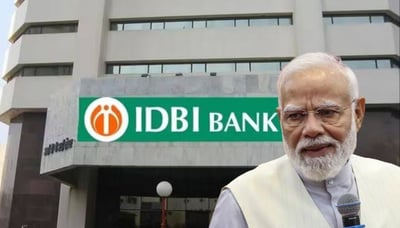
Congress leader and Leader of Opposition in the Lok Sabha, Rahul Gandhi, has sharply questioned the Modi government over its ongoing plan to privatize IDBI Bank. Taking a strong public stand in favor of bank staff and depositors, the senior leader maintained that state owned financial institutions exist to support the economic growth of the whole country, rather than functioning as financial assets to be sold off to multinational corporations. His direct intervention came as employee trade unions continue their public resistance against the official decision to transfer majority ownership of the profitable lender into foreign private hands.
The immediate trigger for the confrontation is the Cabinet Committee on Economic Affairs clearing the sale of a 60.72 percent combined stake in IDBI Bank to Fairfax Financial Holdings, a Canadian investment firm. Under this transaction, the central government plans to offload a 30.48 percent equity share, while the state run Life Insurance Corporation of India will sell a 30.24 percent stake. The strategic buyout will effectively hand over day to day management control of the prominent Indian lender to an overseas corporate group, bringing public sector participation down to a minority level.
Recalling his earlier parliamentary speeches, Rahul Gandhi pointed out that he had formally questioned the administration on the floor of the Lok Sabha about the logic of the buyout. He stressed that he specifically asked why a bank that has successfully returned to strong yearly profitability was being put on the auction block, and what firm guarantees were being given to protect the jobs of existing employees and the savings of ordinary depositors. According to him, the treasury benches offered no convincing explanation to Parliament and proceeded quietly with the sale to the foreign entity.
The financial recovery of the lender forms the foundation of the opposition argument. Years ago, the bank had suffered severe bad loan losses, forcing central authorities and state life insurance funds to inject approximately 25,000 crore rupees to stabilize operations. Thanks to strict recovery drives and the dedication of its workforce, the lender turned around completely, bringing down its bad loans to historic lows and posting strong yearly net profits crossing 9,000 crore rupees. Critics argue that selling a state funded company precisely at the moment it has become strongly profitable makes little commercial sense for Indian taxpayers.
Beyond the balance sheet, Rahul Gandhi highlighted serious concerns regarding social justice and workplace welfare. In a public letter written to the staff members, he warned that once IDBI Bank transitions into a private corporate body, constitutionally guaranteed reservation policies for Scheduled Castes, Scheduled Tribes, and Other Backward Classes will end permanently. He added that existing job security, pension benefits, and hard earned service conditions would lose statutory protection, leaving thousands of bank workers vulnerable to corporate downsizing.
The controversy has expanded following media investigations that raised procedural questions about the financial bidding process. Reports claimed that administrative benchmark share valuations were reviewed and adjusted after private bids were opened, sparking debates over transparency. Opposition parties contrasted the policy choices of previous administrations with current practices, claiming that earlier regimes focused on expanding public banking networks to provide credit to small farmers and local factories, whereas the Modi government has focused on selling built up national assets to private corporations.
The Union Finance Ministry has vigorously defended the disinvestment strategy. Union Finance Minister Nirmala Sitharaman rejected the allegations as baseless political attacks, asserting that all divestment guidelines, valuation standards, and regulatory frameworks were followed through transparent methods. Central officials noted that bringing in global capital and experienced corporate leadership will modernize bank technology, inject fresh business efficiency, and generate fair commercial value for the state's remaining investment stake.
As employee unions hold demonstrations across regional branch offices, the battle over the sale of IDBI Bank has turned into a broader ideological clash over the future of Indian public institutions. The debate questions whether public sector banks should continue operating as direct socio economic cushions for the poor, or be turned over to private investors to pursue commercial returns. With parliamentary sessions approaching and union campaigns growing louder, the sale of IDBI Bank is set to remain one of the most hotly contested economic controversies in the country.