
Mumbai Firecracker Ban Imposed On Rockets And Aerial Fireworks Until November 25 After 137 Diwali Fires
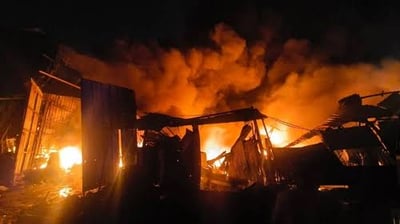
A night of bright lights and celebration across Mumbai turned into a race against disaster as fire alarms rang continuously across the city. Families were gathering on balconies, decorating doorsteps with lamps, and stepping out to enjoy the holiday atmosphere with their children. Within hours, the joyful mood broke down as emergency sirens began wailing through crowded residential roads. Stray firecrackers shot high into the night sky, veered off course, and crashed through open apartment windows, balconies, and cloth awnings. By sunrise, emergency control rooms were flooded with emergency calls, leaving firefighters exhausted and city leaders realizing that traditional holiday fireworks had turned into an unmanageable danger.
The scale of the crisis forced civic leaders to step in with immediate restrictions. The Mumbai Disaster Management Authority announced a complete ban on rockets and all flying aerial fireworks across the entire municipal area until November 25, 2026. The official order came after the Mumbai Fire Brigade recorded 142 fire calls in just twenty-four hours on Sunday, with 137 of those blazes caused directly by firecrackers. That meant fireworks accounted for an astonishing 96 percent of all fires reported across the metropolis in a single day. The sweeping rule follows a similar ban already enforced in the neighboring city of Thane, expanding safety restrictions across the wider urban area.
The official order was signed by Additional Municipal Commissioner and disaster management head Prajakta Verma-Lavangare under the Disaster Management Act. Unlike normal firework rules that only deal with street corners, this new order covers every corner of public and private property within municipal limits. Residents are strictly barred from launching flying fireworks from building terraces, rooftops, open balconies, internal housing courtyards, parking compounds, and dense slum settlements. Officials emphasized that anyone caught disobeying the ban will face police action and could even be sent to jail under national disaster laws.
Mumbai presents a unique danger during firework celebrations because of the way the city is built. Towering glass apartment buildings stand right next to tightly packed informal settlements, with narrow lanes separating tall structures. When someone lights a bottle rocket from a crowded street or a low terrace, nobody can control where it lands. A stray rocket can fly into a tenth-floor balcony, hit drying clothes, ignite wooden outdoor furniture, or land on tarpaulin sheets covering slum roofs. Once a small flame catches fabric or plastic high above the ground, wind currents spread the fire across multiple floors within minutes before residents even notice the danger.
Emergency rescue teams found themselves stretched thin as fire calls poured in from across the city. Suburban areas like Bandra, Andheri, Matunga, Dadar, and Mulund reported dozens of emergency calls within a few hours. Fire engines faced immense trouble navigating through narrow city alleys that were blocked by parked cars and celebratory crowds. In several high-rise buildings, residents had to abandon their homes in panic as thick smoke poured into lift shafts and staircases. While many fires were brought under control quickly, several citizens suffered smoke inhalation and injuries, proving how easily a casual celebration can put innocent neighbors into life-threatening danger.
Prominent citizens and local leaders also raised alarms after witnessing close calls in their own neighborhoods. Filmmaker Vivek Agnihotri shared that a stray aerial rocket flew straight onto his balcony sofa, sparking a fire that was caught just in time by his barking pets. Mumbai Mayor Ritu Tawde issued an appeal to all citizens, stating clearly that one person's celebration must never become the cause of another person's sadness. She reminded the public that court directives strictly prohibit burning firecrackers on pedestrian walkways and public roads. Political leaders across party lines supported the ban, demanding that police actively punish individuals whose careless firework use damages property or endangers lives.
The sudden restriction has also sparked wide discussions inside housing societies across the city. Management committees in large residential complexes have begun sending circulars and phone alerts to flat owners, warning them against using terraces for fireworks. Security guards have been instructed to patrol open grounds and report anyone attempting to light rockets. While some shopkeepers and firework vendors expressed disappointment over losing sales during the holiday week, most local residents welcomed the decision. Many senior citizens, parents of infants, and pet owners had long complained about the noise and terror caused by flying fireworks exploding right outside bedroom windows.
Fire department officials pointed out that the problem has been worsening every year. Comparative records show that fire calls linked to fireworks have steadily climbed with each passing festival season as consumers buy louder, more powerful aerial products. Many of these modern fireworks shoot high into the air and explode in huge bursts of color, but their burning debris falls back to earth while still red hot. When hundreds of people launch these items simultaneously in a concrete jungle, the law of averages guarantees that some will land on combustible surfaces.
Enforcing the new ban will require active cooperation between local police teams, municipal ward officers, and neighborhood groups. Because private balconies and rooftops cannot be watched from main roads at all times, authorities are relying on citizens to report violations in their buildings. Police stations have been instructed to act on complaints without delay and inspect local markets to ensure flying fireworks are not being sold under the counter. Ward officers have also been asked to keep special watch on high-density settlements where a single spark could leave hundreds of families homeless.
The strong steps taken in Mumbai and Thane show a growing realization that safety rules must adapt to urban growth. Traditions bring joy and togetherness, but they should never cost human lives, destroy property, or overwhelm emergency health workers. By putting a complete stop to rockets and aerial explosives until November 25, the city hopes to prevent further disasters and ensure that the remaining festive days pass in safety and peace.