
Muslim Organisations Launch Nationwide Protest Against Demolition Of Religious Structures
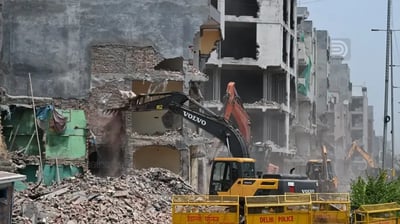
The narrative of religious freedom and structural preservation in India has entered a highly contentious phase as multiple prominent Muslim organisations unite to challenge a series of government demolition drives. Leaders from Jamiat Ulama i Hind, Jamaat e Islami Hind, and the All India Muslim Personal Law Board have expressed deep concern over the sudden destruction of historical mosques, madrasas, and shrines. The conflict escalated significantly following widespread administrative actions in the states of Rajasthan and Uttar Pradesh in June 2026. In the border districts of western Rajasthan, including Bikaner, Phalodi, Jaisalmer, and Barmer, local authorities used heavy machinery to pull down at least 14 religious structures within a short span of 7 days. At the same time, authorities in Moradabad, Uttar Pradesh, demolished a local mosque claiming it occupied public village land, while the 1000 year old Ganj Shahida mosque in Varanasi was served an eviction notice by railway authorities. These actions have triggered a major political debate, forcing minority organisations to launch a nationwide protest and seek immediate intervention from high courts to halt what they describe as a direct assault on their constitutional rights.
In response to these developments, the leadership of major Muslim bodies has moved from verbal condemnation to active legal resistance and public mobilization. Jamiat Ulama i Hind dispatched a high level delegation to Jodhpur and Barmer to gather land deeds, panchayat records, and historical evidence to prepare strong court petitions. The president of the organisation, Maulana Mahmood Asad Madani, emphasized that declaring centuries old structures as sudden threats to national security or public land violates the principles of natural justice. Simultaneously, the All India Muslim Personal Law Board held an emergency executive committee meeting in New Delhi where they resolved to set up a dedicated action committee. This committee aims to coordinate a massive nationwide protest movement alongside various civil society groups to address the social and political marginalisation of the community. Legal representatives argue that local administrations are routinely violating the guidelines set by the Supreme Court of India, which mandate that no property should be destroyed without giving the affected parties a fair hearing and sufficient time to seek judicial protection. Reports indicate that in several cases, notices were delivered just 24 hours before the bulldozers arrived, rendering the legal right to appeal completely ineffective.
An objective examination of the situation reveals a sharp contrast between official administrative policy and its ground execution. Government officials maintain that these operations are part of a routine, faith neutral campaign to remove illegal encroachments from public grazing lands and secure sensitive zones within a 15 kilometer radius of the international border. However, the apparent focus on minority places of worship raises critical questions regarding institutional neutrality. While thousands of unauthorised structures built by various communities exist across these states, the sudden speed and precision with which Muslim religious sites are being dismantled suggest a selective enforcement pattern. This selective approach runs the risk of damaging the social fabric and creating unnecessary communal polarization for political gains. Interestingly, the reality on the ground presents a different narrative of unity. In multiple villages across western Rajasthan, local Hindu residents openly joined their Muslim neighbors to protest the demolition of historical shrines, proving that local cultural bonds remain resilient against top down administrative divisions.
The unfolding crisis highlights the urgent need for a balanced approach where regulatory laws are enforced without compromising constitutional safeguards. The current strategy adopted by Muslim organisations focuses heavily on documentation, peaceful mobilization, and institutional litigation to ensure that the rule of law remains supreme over executive overreach. By taking these cases to the High Courts of Rajasthan and Uttar Pradesh, as well as the Supreme Court, the bodies are seeking to establish a clear legal precedent that protects religious structures from arbitrary local actions. The resolution of this friction will ultimately depend on how effectively the judiciary asserts its authority to monitor administrative actions. For a secular democracy with a population of over 1400000000 people to thrive, the enforcement of civic regulations must be handled with transparency, equality, and complete adherence to judicial processes, ensuring that no community feels targeted by the state apparatus.