
NASA Selects Three New Scientific Payloads for Moon Base to Measure Seismic Activity, Explore Underground Lava Tubes and Map Water Ice
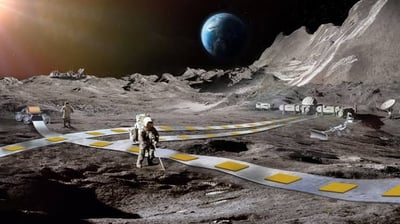
NASA has officially selected three cutting-edge scientific payloads to gather critical ground data ahead of long-term human missions to the Moon. The robotic experiments will travel to the lunar surface aboard uncrewed commercial landers to study ground vibrations, locate underground lava tunnels, and map frozen water reserves. These scientific tools are designed to answer crucial survival questions before astronauts build and occupy permanent living bases on the lunar landscape.
The mission packages were chosen under the Payloads and Research Investigations on the Surface of the Moon initiative, widely known as PRISM. Through this framework, NASA purchases cargo delivery services from private aerospace companies under the Commercial Lunar Payload Services program. Instead of designing and operating every single spacecraft directly, the agency books space on commercial lunar landing vehicles, allowing scientists to send specialized measurement tools quickly and at a lower overall cost.
The first chosen project is the Lunar Environment Monitoring Station South Pole, known as LEMS-SP. Led by researchers at the University of Maryland, Baltimore County, this instrument package acts as an autonomous weather and seismic surveillance station. Equipped with a sensitive short-period seismometer, it will detect moonquakes and track incoming micrometeorites that strike the surface. By measuring tiny particles drifting into the thin lunar atmosphere, the device will help mission planners understand the natural hazards astronauts must endure during prolonged stays.
The second major payload is called the Geophysical Investigation for Mapping Lunar Interior, or GIMLI. Managed by the Planetary Science Institute, this specialized experiment will travel to a dramatic geographical feature known as the Marius Hills Pit. Scientists believe this deep surface hole may be an opening to ancient underground lava tubes formed by prehistoric lunar volcanoes. GIMLI will use ground-scanning tools to confirm whether a large, hollow underground chamber exists beneath the pit.
Confirming the presence of empty underground caves could completely reshape how engineers plan permanent living quarters on the Moon. The surface of the Moon is a harsh environment where temperatures swing by hundreds of degrees between day and night, alongside constant bombardment by solar radiation and cosmic rays. Natural subterranean lava tubes offer thick rock ceilings that could serve as ready-made shelters, shielding astronauts and delicate habitats from temperature swings, flying space rocks, and harmful radiation.
The third payload selected for the lunar surface is the Depth Imager with Spectral and Color Optics, referred to as DISCO. Led by scientists at the NASA Ames Research Center in California, the instrument is designed to provide direct ground-level measurements of frozen water trapped inside permanently shadowed cold spots. While orbiting satellites have previously detected signs of water ice near the lunar poles, DISCO will examine soil layers directly to find out exactly where the ice is buried and how much can actually be extracted.
Locating usable water on the lunar terrain is a critical step toward creating a self-sustaining human presence. Hauling heavy drinking water, oxygen, and liquid rocket fuel from Earth is extremely expensive and logistically difficult. If astronauts can dig up buried lunar ice, they can purify it for daily drinking, split the molecules into breathable oxygen, and manufacture hydrogen-based rocket fuel to power spacecraft traveling back home or venturing toward Mars.
DISCO will also study how rocket thrusters disturb loose surface dust during landings and evaluate how firm the surrounding ground is for heavy rover wheels. Lunar dust is extremely abrasive and jagged, capable of wearing down space suits, scratching camera lenses, and jamming machinery. Gathering ground-truth data on soil behavior will help engineers construct sturdy landing pads, roads, and building foundations out of local lunar materials.
Leadership at NASA emphasized that deploying scientific experiments ahead of human arrival acts as a vital survival guide for deep space exploration. By testing the soil, mapping shelter options, and confirming natural resources beforehand, the space agency aims to minimize physical dangers for future explorer crews while testing operational strategies that will eventually guide the first human missions to the planet Mars.