
Pellet gun injuries reported by 25 year old student protester during Delhi demonstration on 20 July 2026
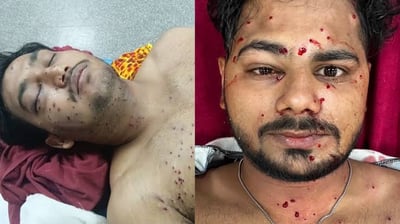
A horrifying medical record from Lady Hardinge Hospital exposed the physical toll of police action during youth demonstrations in New Delhi on 20 July 2026. Prashant, a 25 year old student resident originally from Bihar, recounted the frightening moments when steel pellets pierced his body during the Cockroach Janta Party protest march near Jantar Mantar. What started as a peaceful gathering of young citizens demanding transparency in national competitive examinations turned into chaos around 4 PM as crowd control measures escalated. Seeking cover near Palika Bazar after initial police action, Prashant was struck by a volley of metallic projectiles that left him unable to feel his right arm for several hours.
Friends rushed the bleeding 25 year old to the emergency ward at Lady Hardinge Hospital at 4:30 PM on 20 July 2026. Official discharge documents accessed directly from the hospital state under the clinical assessment section that the patient suffered multiple pellet injuries across his right upper limb, chest, and inguinal region. Doctors categorized the tissue damage as first degree severity, treating the puncture wounds before releasing him to recover at home. Prashant later shared that panic gripped him when his arm went completely numb, leaving him terrified that he might permanently lose the use of his hand.
This medical documentation provides solid physical evidence that directly contradicts initial public statements made by security agencies regarding the equipment used that day. While police officials publicly denied deploying pellet guns or rubber bullets, medical admission cards across Delhi facilities tell a very different story. Multiple young demonstrators, including a 19 year old student and a 28 year old journalist, were admitted to major hospitals with identical circular puncture wounds above the waist. Official crowd management manuals explicitly state that kinetic force must only be aimed below the waist to avoid life threatening injuries to vital organs.
The emergence of verified hospital records raises troubling questions about accountability and proportional force during peaceful civilian demonstrations. When anti riot weapons designed for high conflict zones are used against young students, the risk of permanent disability becomes severe. As parliamentary leaders demand a complete review of force deployment guidelines, Prashant continues his physical recovery while nursing lingering trauma. The official hospital record stands as an indelible transcript of a afternoon that changed the conversation around student safety and democratic protests in India.