
Rahul Gandhi Calls PM Modi FICCI Speech a Confession and Says Monopoly Does Not Create Jobs
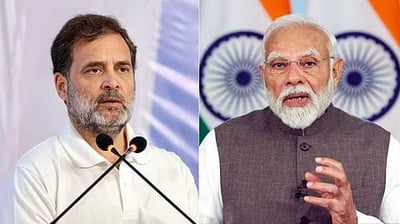
A major political exchange has broken out between the Congress party and the central government over employment, worker wages, and business competition in India. Leader of the Opposition in the Lok Sabha Rahul Gandhi strongly criticized Prime Minister Narendra Modi following the Prime Minister speech at the annual meeting of the Federation of Indian Chambers of Commerce and Industry in New Delhi. According to Rahul Gandhi, the Prime Minister remarks questioning corporate leaders on jobs and salaries were not complaints against industry, but rather an admission of his own government economic failures.
The controversy started during the FICCI Annual General Meeting and Annual Convention held on 19 November 2026. Addressing top business leaders and company owners, Prime Minister Narendra Modi pointed out that his government had reduced the basic corporate tax rate from 30 percent in 2014 down to 22 percent, simplified tax refunds, and given income tax relief up to 12 lakh rupees so people have more money to spend. Despite these major tax benefits, the Prime Minister expressed disappointment that private companies had not hired more staff or raised employee salaries. Speaking candidly to the silent audience, PM Modi remarked that industry leaders have such a huge appetite that no matter how much the government gives them, their stomachs never seem to get full.
On 20 November 2026, Rahul Gandhi took to the social media platform X to turn the Prime Minister words back against him. Referring directly to PM Modi comment about business leaders being too hungry to fill their stomachs, Gandhi wrote that the entire country knows whose hunger this really is. He questioned how many jobs had actually been created by the select group of large business houses that were handed control over major national assets such as airports, seaports, mines, forests, electricity, coal, and roads.
In his detailed post, Rahul Gandhi argued that real job creation in India comes from small traders and micro, small, and medium enterprises rather than a handful of giant corporations. He accused the central government of damaging these vital small businesses through past decisions like demonetisation and what he called a poorly designed Goods and Services Tax system. Furthermore, Gandhi alleged that even large companies that wanted to compete fairly in the market had lost their fair chance due to government favoritism. Stating his main argument clearly, he wrote that a monopoly does not create jobs, and instead only pushes up prices for ordinary consumers and removes healthy competition.
Rahul Gandhi also reacted to the Prime Minister playful complaint about the lack of clapping from business leaders in the hall during his speech. PM Modi had noted that industry leaders simply wait for the government to do everything while they watch from the sidelines. In response, Gandhi claimed that current policies had left no section of society happy enough to applaud, including industrialists, small shopkeepers, unemployed youth, and middle-class families struggling with rising living costs.
Other senior Congress leaders also joined the discussion to share their views on the economy. Congress president Mallikarjun Kharge stated that during his FICCI speech, PM Modi sounded more like an opposition leader complaining about problems rather than a Prime Minister who has led the country for twelve years. Kharge added that India achieved its highest ten-year average economic growth during the previous Congress-led government and accused the ruling party of allowing a few select capitalists to control key parts of the economy. Similarly, Congress spokesperson Jairam Ramesh stated that weak private investment and slow wage growth were direct results of government policies and rising imports from China hurting local factories.
On the other hand, Prime Minister Modi and supporters of the government maintain that the central administration has done its part to create a business-friendly environment. During his address, PM Modi urged Indian companies to stop relying on easy domestic sales in a huge market of 1.4 billion people and instead focus on improving product quality, investing in research, and expanding hiring to strengthen the nation. Leaders from the Bharatiya Janata Party also pushed back against Rahul Gandhi criticism, defending the government economic reforms and accusing the opposition leader of constantly attacking Indian businesses and institutions.
As both political sides continue to debate who is responsible for creating jobs and raising incomes, the exchange highlights a major economic question facing India today. While the government is calling on private companies to step up and share their tax savings with workers, the opposition insists that true employment growth will only return when small businesses are protected and fair competition is restored across every sector.