
Ram Ko Loota Desh Ko Loota Says Kapil Sibal Attacking BJP Over Ayodhya Land Deals
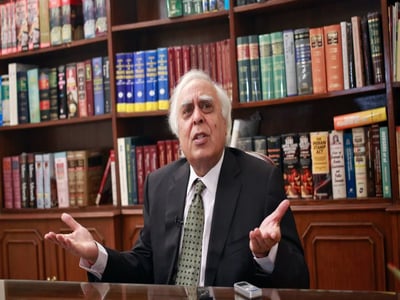
A massive national political controversy erupted after senior advocate and independent Rajya Sabha member Kapil Sibal launched a scathing public attack against the leadership of the Bharatiya Janata Party regarding alleged land scams in the historic city of Ayodhya. Sibal targeted the ruling party using a highly potent and direct slogan stating that they looted Lord Ram and simultaneously looted the entire nation. The veteran legal expert and politician raised serious institutional integrity questions regarding a series of prime real estate properties purchased around the newly constructed Ram Temple complex, alleging that land values were artificially and deliberately manipulated to financially benefit specific individuals who enjoy close proximity to the ruling political establishment. The entire political row gained immense momentum following investigative media reports that pointed toward highly suspicious and fast paced land transactions where large pieces of land were initially bought at incredibly low prices from local landowners and subsequently resold to the official temple trust at exponentially inflated rates within a matter of mere minutes. This explosive development immediately triggered an intense nationwide debate and shifted the central political focus squarely onto the financial transparency, accounting books, and ethical governance of the multi crore temple construction project finances.
The political backlash intensified rapidly across the country as multiple prominent opposition leaders joined the chorus to demand a high level independent judicial probe into the complete financial books and transaction history of the Shri Ram Janmabhoomi Teerth Kshetra Trust. Sibal detailed legal and corporate scrutiny highlighted specific official transaction records where the registered land valuation mysteriously skyrocketed from 20 lakh rupees to an astonishing 18 crore rupees in a span of less than 1 hour. According to the official property registries highlighted by the opposition parties, local individuals with deep administrative ties and political connections were allegedly embedded in these quick flip property deals to maximize personal profits from public donations. The Bharatiya Janata Party leadership along with the senior management of the temple trust strongly denied each and every allegation of corruption, labeling the charges as a deeply malicious and coordinated attempt by opposition parties to defame the sacred national project and intentionally hurt the religious sentiments of millions of devotees worldwide. However, the verified legal documentation presented by critics has forced the local Ayodhya administration to face intense public questioning regarding real estate registry guidelines, circle rates, and sudden fast track registrar approvals in the immediate temple vicinity.
A deeper institutional review of this expanding controversy reveals a massive regulatory oversight in how large scale public charitable trusts operate when placed under intense political spotlights and receiving thousands of crores in public funds. When billions of rupees in public donations are funneled into a single high profile national project of this magnitude, the complete absence of an absolute real time public audit mechanism creates a fertile ground for financial speculation, regional land hoarding, and severe trust deficits. The rapid commercialization of real estate in Ayodhya following the landmark 2019 legal verdict should have automatically prompted the state government to enforce strict price caps, freeze speculative private transactions, and implement transparent institutional land allocation rules across the district. Instead, the sudden uncontrolled rush of private intermediaries and political executives flipping land parcels for massive overnight profits suggests a total failure of local regulatory checks and state level oversight. This financial friction has handed the combined opposition a powerful ethical narrative to counter the ruling party primary cultural achievement, successfully turning a historic landmark religious project into a complex national dispute over financial accountability and corporate governance.
This unfolding situation highlights how easily deeply revered cultural symbols can become deeply entangled in partisan political warfare when financial transparency is compromised by administrative lapses. While the ruling establishment continues its efforts to brush off the serious allegations as mere political vendetta and electoral theater, the undeniable presence of registered public sale deeds with staggering price differences requires a clear structural explanation from independent financial auditors rather than simple ideological counters from party spokespersons. For the common citizens of the nation who selflessly contributed their hard earned money to the temple construction through small nationwide donation drives, these unaddressed allegations create an uncomfortable and highly distressing layer of institutional doubt. Ultimately, to protect the sanctity of public institutions, religious trusts, and the faith of the public, the central government must allow an independent judicial or supreme court monitored financial audit of all land transactions executed within a 5 kilometer radius of the temple over the past 3 years. Relying purely on aggressive political rhetoric will completely fail to resolve the underlying legal and constitutional questions raised by veteran legal minds like Sibal.