
Russells Viper Causes Highest Snakebite Deaths In India Outpacing Spectacled Cobra
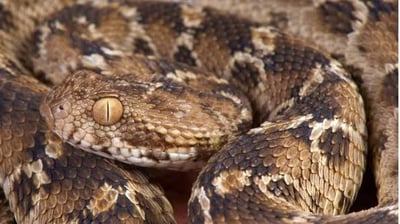
In the quiet farmland reaches of rural India, where paddy fields meet sprawling grasslands, an unseen predator poses a silent yet catastrophic danger to daily life. While popular culture and traditional folklore have long portrayed the spectacled cobra as the ultimate symbol of reptilian danger, scientific studies and hospital records tell a drastically different story. Official health findings show that the notorious Russells viper is responsible for approximately forty-three percent of all snakebite incidents recorded across the Indian subcontinent. By comparison, the Indian cobra accounts for roughly twelve percent of total bites. Known scientifically as Daboia russelii, this thick-bodied pitless viper claims tens of thousands of human lives every year, making it the most lethal venomous species operating within the country. Its ability to adapt effortlessly to agricultural landscapes brings it into direct, daily contact with farmers, laborers, and rural families who remain largely unaware of its presence until an accidental step triggers a lightning-fast defensive strike.
Understanding why the Russells viper causes such widespread devastation requires examining its natural habitat, physical features, and distinct behavioral patterns. Measuring between four to five feet in length, the snake features a robust body patterned with three distinct longitudinal rows of dark, oval-shaped blotches bordered by lighter rings. This unique chain-like marking provides flawless camouflage among fallen leaf litter, dry agricultural husks, and tall grasses. Unlike the proactive nature of many other reptiles that slither away when humans approach, the Russells viper often relies on its cryptic coloration to stay motionless, hoping to remain undetected. However, when an unsuspecting worker accidentally steps on or near its coiled form, the creature reacts instantly. It coils into tight defensive loops, raises the front portion of its body, and produces a prolonged warning hiss that rivals the shrill sound of a high-pressure steam valve. If the threat persists, it strikes with explosive velocity and immense muscular force, injecting massive quantities of highly toxic venom through long, hollow fangs.
The severe biological impact of a Russells viper bite stems from its complex hemotoxic venom, which acts very differently from the neurotoxic venom delivered by cobras and kraits. Upon entering the human bloodstream, the venom rapidly breaks down tissues, destroys red blood cells, and completely disrupts the body ability to form blood clots. Victims experience excruciating local pain, intense swelling, and rapid discoloration around the bite site within minutes. As the toxin spreads through the circulatory system, severe internal and external bleeding develops, causing hemorrhage from the gums, nose, eyes, and urinary tract. Beyond acute blood loss, the venom inflicts catastrophic damage on vital internal organs, with acute kidney failure developing in nearly thirty percent of untreated hospital cases. Furthermore, medical researchers have documented long-term endocrinological consequences among survivors, including permanent damage to the pituitary gland that leads to lifelong hormonal imbalances.
The high frequency of human encounters with the Russells viper is directly linked to the booming rodent populations found near human settlements and agricultural zones. Farmers cultivate vast stretches of grain crops that attract rats and mice, creating an abundant feeding ground for hungry vipers. As night falls and temperatures cool, these nocturnal hunters move into field pathways, storehouses, and domestic courtyards to track their prey. Because thousands of agricultural workers harvest crops barefoot or wearing basic sandals during dusk and dawn, accidental encounters become almost inevitable during peak farming seasons. Environmental changes, deforestation, and expanding human settlements have further compressed natural habitats, forcing wildlife and rural populations into closer proximity than ever before. Consequently, medical experts refer to snakebite envenomation as a neglected tropical disease that disproportionately impacts vulnerable agricultural communities driving the rural economy.
Mitigating the threat posed by this dangerous reptile requires a combination of community education, preventative field habits, and rapid access to specialized medical care. Health authorities stress that traditional folklore treatments, such as making incisions around the bite, attempting to suck out venom, or tying tight cloth tourniquets, are extremely dangerous practices that worsen tissue damage and delay life-saving intervention. Instead, anyone bitten by a Russells viper must keep the victim completely calm, immobilize the affected limb using a simple splint, and transport the person immediately to the nearest public healthcare facility equipped with polyvalent antivenom. In India, polyvalent antivenom is manufactured specifically to neutralize bites from the Big Four venomous species, including the Russells viper, Indian cobra, common krait, and saw-scaled viper. Equipping farmers with heavy protective boots, promoting the use of bright torches during night walks, and maintaining well-stocked rural health centers remain essential steps toward reducing fatal outcomes and protecting communities from this formidable apex predator.