
Singapore Scientists Build World Most Accurate Atomic Clock Using Lutetium to Outpace United States and China in Race to Redefine the Second
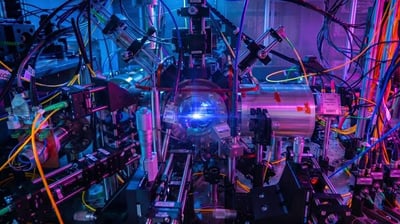
Researchers in Singapore have created the most precise timekeeper in human history, marking a major scientific upset in an international race long led by the United States and China. Built by a team at the Centre for Quantum Technologies at the National University of Singapore, the record-setting device measures time with an accuracy that reaches nineteen decimal places. The instrument is so exceptionally steady that it would not gain or lose even a single second over three hundred billion years, an interval far longer than the entire age of the universe.
The breakthrough arrives at an important turning point for international science as measurement bodies prepare to officially redefine the basic unit of time, the second, after 2030. Since the 1960s, global clocks have relied on the natural vibration of cesium atoms to define a standard second. While cesium atomic clocks keep everyday systems like satellite navigation, internet networks, and telecommunications functioning smoothly, next-generation optical clocks that track much faster light waves have begun to make the older systems look slow and fuzzy.
For years, research giants funded by major governments in North America, Europe, and Asia poured massive funding into clocks made from elements like strontium, ytterbium, and aluminum. The Singapore group decided to take an entirely different path more than a decade ago. While the rest of the world competed around standard designs, the Singapore team placed its trust in a single charged ion of lutetium, a rare metal that had been largely ignored by global time labs.
The decision to focus on lutetium turned out to be an inspired choice. Most optical clocks are extremely fragile instruments that require complex laboratory setups to protect them from tiny changes in room temperature, stray electromagnetic waves, and environmental heat. When background heat changes even slightly, atoms in regular clocks wobble and introduce tiny timing errors. Lutetium atoms, however, naturally ignore changes in heat and magnetic fields, allowing them to tick with steady accuracy even in unstable conditions.
The team, led by Associate Professor Murray Barrett, published their findings in the scientific journal Nature after testing two identical lutetium clocks side by side for over two hundred hours. When scientists build two high-precision watches, getting them to tick in perfect harmony without drifting apart is one of the hardest challenges in experimental physics. The comparison between the two Singapore instruments established a new world record for synchronization, outperforming previous benchmarks set by top research institutions.
The sensitivity achieved by the lutetium system is so deep that it can reveal the invisible effects of gravity predicted by Albert Einstein. According to the laws of general relativity, time moves slightly faster the farther an object moves away from the gravitational pull of the Earth. The Singapore instruments were able to measure tiny changes in the flow of time caused by a height difference of just five millimeters between two clocks sitting on the same table.
Practical applications for such super-accurate clocks extend well beyond setting standard calendar times. Because these clocks can sense the tiniest changes in Earth gravity, scientists plan to use them to detect underground volcanic magma movement, discover hidden mineral deposits, and track rising sea levels with millimeter-level precision. Clocks of this caliber could also help astrophysicists search for invisible dark matter and test whether the fundamental laws of nature change over cosmic history.
The team now plans to shrink their room-sized laboratory equipment down into smaller, portable boxes that can be transported outside laboratory walls. By turning a neglected element into the sharpest measuring ruler ever created, the small island nation has proven that patient, original scientific thinking can leapfrog the biggest and best-funded laboratories in the world.