
Supreme Court Refuses Interim Protection for Pawan Khera Over Multiple Passport Allegations Case
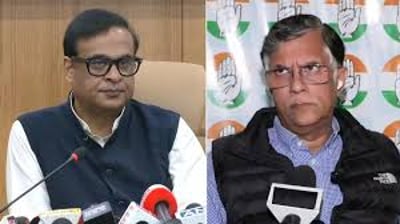
The legal battle for Congress leader Pawan Khera intensified on April 17, 2026, as the Supreme Court of India addressed his plea for protection from arrest. The case stems from an FIR filed by Riniki Bhuyan Sharma, the wife of Assam Chief Minister Himanta Biswa Sarma, who alleged that Khera made false claims regarding her holding multiple passports. Senior advocate Abhishek Singhvi, representing Khera, argued passionately for the protection of personal liberty as guaranteed under Article 21 of the Indian Constitution. Singhvi emphasized that Khera is not a hardened criminal and that the judicial process should not be used as a tool for political vendetta or unnecessary incarceration.
Despite these arguments, the Bench headed by Justice J.K. Maheshwari took a procedurally strict stance. The Supreme Court refused to grant the requested interim protection that would have shielded Khera from arrest until the following Tuesday. Instead, the court directed the Congress leader to immediately move the competent court in Assam to seek anticipatory bail. This decision highlights a growing judicial trend of requiring high-profile individuals to follow standard legal hierarchies rather than granting immediate relief at the highest level of the judiciary, even when constitutional liberties are invoked.
The fallout of this decision places Khera in a precarious position. By requiring him to seek bail in Assam, the court has essentially moved the theater of this legal conflict to a jurisdiction where the political climate is particularly charged. The allegations involving the family of a sitting Chief Minister add a layer of complexity to the case, as the legal proceedings will inevitably be viewed through a political lens. Singhvi’s invocation of Article 21 was a strategic attempt to frame the issue as a fundamental rights violation, but the court’s refusal suggests that they do not currently view the threat of arrest in this specific context as an immediate breach of constitutional safeguards that warrants bypassing lower courts.
As the situation unfolds, the focus now shifts to the courts in Assam. This case serves as a litmus test for the balance between the right to free political speech and the legal consequences of making specific factual allegations against public figures and their families. While Khera’s defense maintains that he is a law-abiding citizen merely performing his role as a political spokesperson, the refusal of interim protection by the Supreme Court means he must now navigate the local judicial system under the looming threat of potential arrest. The outcome of his anticipatory bail plea in Assam will likely dictate the next phase of this high-profile legal-political drama.