
These Tricks Do Not Work on Me Says Eisenkot While Rejecting Netanyahu Unity Government Appeal
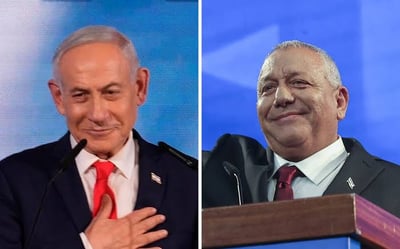
Israeli political tensions have reached a sharp turning point as opposition leader Gadi Eisenkot publicly rejected a fresh call for a national unity government made by Caretaker Prime Minister Benjamin Netanyahu. Speaking out after Netanyahu released a video message urging rivals to put aside their differences, Eisenkot dismissed the offer as nothing more than a political stunt. He stated clearly that Netanyahu knows he lost the recent national election and that these political tricks do not work on him.
The public clash comes at a critical moment in Israeli politics following last month’s general election. In that vote, Netanyahu’s ruling bloc won only 53 seats, losing its majority in the 120-seat parliament, known as the Knesset. With backing from 67 lawmakers, President Isaac Herzog officially handed Eisenkot the responsibility to form a new government within a 28-day window, with the option of a 14-day extension if needed. As Eisenkot works to build a working coalition, Netanyahu has repeatedly stepped forward to suggest joining forces under a broad unity banner.
In his video statement, Netanyahu argued that Israel faces massive and complex security challenges that require all major Jewish parties to come together. He pointed specifically toward regional threats, claiming that Iran is trying to revive its nuclear program and would not hesitate to use nuclear weapons against the country. According to Netanyahu, a recent security conversation he held with Eisenkot only made him more certain that a national unity government is the only way to keep the nation safe, manage military recruitment rules, and eliminate outside threats.
Netanyahu also used his speech to warn against Eisenkot’s reported plan to form what is being called a national emergency minority government. Under that arrangement, the 48 lawmakers in Eisenkot’s core bloc would vote in favor of the new government, while Netanyahu’s 46 supporters would vote against it. The remaining 26 members of parliament, representing Arab and ultra-Orthodox parties, would abstain from voting, which would allow Eisenkot’s government to pass without needing an absolute majority. Netanyahu called this plan weak and dangerous, urging Eisenkot to meet him in one room without preconditions and drop all political boycotts.
Minutes after Netanyahu’s appeal aired, Eisenkot hit back with a blunt response on social media. The former army chief accused Netanyahu of pretending to want peace and cooperation in public while actively creating division and anger behind the scenes. Eisenkot pointed out that formal coalition talks between his Yashar party and Netanyahu’s Likud party are already scheduled and underway, making Netanyahu’s sudden video appeal look like a desperate attempt to stall the democratic process and confuse the public.
Sources close to Eisenkot’s party also rejected the idea that their recent security meeting changed their minds about removing Netanyahu from power. Party insiders noted that nothing discussed during the briefing altered their belief that Netanyahu must step down and that the new opposition bloc needs to take urgent control over national security oversight. Eisenkot also reminded the public that just four days earlier, Netanyahu had attacked his bloc in parliament, accusing them of trying to build a fragile government dependent on Arab lawmakers.
Eisenkot has made it clear that while he is willing to talk with members of Netanyahu’s Likud party and outgoing Finance Minister Bezalel Smotrich’s Religious Zionism party, those groups must prove their commitment is genuine. He stated that any new government under his leadership must strictly distance itself from extremist political forces, specifically pointing to supporters of far-right minister Itamar Ben Gvir.
To test whether Netanyahu’s allies are serious about peaceful cooperation, Eisenkot pointed to the upcoming parliamentary vote to replace Knesset Speaker Amir Ohana, a close ally of Netanyahu. The opposition has nominated former army officer Matan Kahana for the speaker post. Eisenkot challenged Likud and Religious Zionism lawmakers to show good faith by allowing the democratic process to unfold normally and supporting Kahana’s appointment rather than blocking parliamentary work.
The political standoff is further complicated by deep disagreements over the role of Arab-Israeli lawmakers. Arab parties won a record number of seats in the recent election, and Eisenkot has strongly criticized Netanyahu for running what he described as a racist campaign aimed at shutting those lawmakers out of the political process. While Netanyahu’s version of a unity government strictly excludes Arab parties, Eisenkot’s coalition strategy relies on broader parliamentary cooperation to unseat the longtime leader.
For now, the battle lines in Jerusalem remain firmly drawn. Netanyahu continues to frame his survival in office as a matter of national security, hoping to pressure rivals into keeping him at the center of power. However, Eisenkot’s sharp refusal signals that the opposition is determined to move past the Netanyahu era and build a new administration on its own terms, setting the stage for intense political negotiations over the next few weeks.