
Trinamool municipal strongholds collapse in West Bengal as more than 100 councillors resign over corruption and internal feud
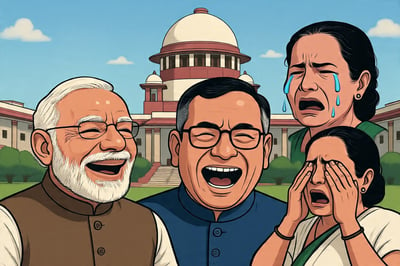
The political landscape of West Bengal is witnessing an unprecedented shakeup as the grassroots foundations of the Trinamool Congress face an accelerating breakdown. In less than three weeks since the state government transitioned to a new administration, a massive wave of mass resignations has paralyzed multiple municipalities across the traditional strongholds of the party. Well over one hundred civic body members have formally stepped down from their administrative positions, dealing a heavy blow to the internal stability of the political organization. This rapid collapse is visible across crucial industrial and urban belts, including Bhatpara, Kanchrapara, Halisahar, Garulia, and North Barrackpore. The abrupt departure of these representatives has left key municipal boards on the absolute brink of total collapse, triggering an immediate governance crisis that threatens to halt basic public service delivery for residents.
The localized nature of these rebellions reveals how deeply the institutional crisis has penetrated areas that were once considered unassailable bastions of power. In the Bhatpara municipality, an overwhelming thirty councillors submitted their resignations together, completely shifting the local balance of power. A highly similar scenario played out in North Barrackpore, where sixteen councillors, including the municipal chairman Maloy Ghosh, stepped down simultaneously, citing moral responsibility for recent electoral failures. Even more alarming for the central leadership of the party is the unfolding political drama in Diamond Harbour, an area widely recognized as the direct political turf of top national leader Abhishek Banerjee. In Diamond Harbour, eight out of sixteen sitting councillors resigned from the civic board, alleging severe financial discrepancies and heavy handed police actions that bypass the standard democratic consent of the elected municipal body.
A closer inspection of this sudden wave of exits reveals a complex mix of intense public dissatisfaction, systemic corruption, and growing internal factionalism. The massive loss of authority has been heavily accelerated by a series of aggressive administrative crackdowns, including bulldozer actions targeting illegal multi storey structures built by local strongmen associated with the party. Furthermore, the arrest of over seventy local level leaders within the past three weeks on serious charges of extortion and financial irregularities has completely broken the confidence of grassroots representatives. While many resigning councillors officially blame a lack of proactive guidance from upper management, the reality points toward a frantic attempt by local leaders to distance themselves from a crumbling political structure. By stepping down en masse, these representatives are attempting to shield themselves from public anger regarding poor civic services and mounting legal scrutiny over irregular building approvals.
The institutional paralysis caused by these developments is raising serious questions about the future of local governance in West Bengal before upcoming civic contests. The mass resignations have created a critical administrative vacuum, leaving several municipalities without the necessary quorum to approve public welfare funds or oversee basic urban infrastructure maintenance. The opposition, particularly the Left parties and the ruling state administration, are quickly moving to occupy the expanding political space, viewing this structural disintegration as clear proof that the party is melting away under public pressure. With top leadership figures maintaining a noticeable silence and a vast majority of regional legislators skipping recent protest programs, the internal organizational unity has completely fractured. The ongoing developments strongly suggest that the political apparatus is experiencing a historic realignment, where independent public accountability is finally breaking through decades of unvouched local dominance.