
Trump Announces Sudden US Iran Peace Deal But Furious Israel Vows To Keep Genocide on
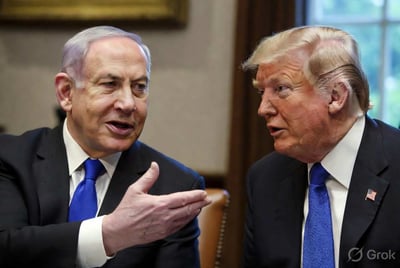
The global community witnessed a monumental shift in international relations as United States President Donald Trump announced the finalization of a comprehensive peace agreement with Iran. This sudden development aims to bring a permanent end to 15 weeks of intense military conflict that had pushed the Middle East to the brink of a catastrophic regional war. The breakthrough agreement, formally structured as a one and a half page memorandum of understanding, was mediated with the critical assistance of regional players including Pakistan and Qatar. As part of the initial implementation of the deal, the United States has authorized the immediate removal of its naval blockade, allowing international maritime traffic to resume through the critical shipping lanes. President Trump joyfully declared the deal complete, signaling that the global economy could finally breathe a sigh of relief after months of devastating volatility.
Almost immediately after the announcement, global financial and energy markets reacted with euphoria. The strategic Strait of Hormuz, a vital artery through which approximately 20 percent of the world liquefied natural gas and crude oil flows, is slated to be completely open to toll-free commercial shipping within days. International oil benchmarks experienced a dramatic plunge, with Brent crude dropping below 84 dollars a barrel as the panic over global energy supply security dissolved. While the deal mandates an immediate halt to hostilities on all active fronts, including the heavily bombarded regions of Lebanon, the underlying foundation of this truce remains incredibly thin. The United States and Iran are scheduled to formally sign the finalized text in Geneva, Switzerland, which will initiate an intensive 60 day technical negotiation period designed to tackle the most complex geopolitical friction points. Under the preliminary terms, United States Vice President J.D. Vance confirmed that international nuclear inspectors will absolutely return to Iranian facilities to oversee the destruction of highly enriched uranium stockpiles, while rumors circulate regarding the phased release of 24 billion dollars in frozen Iranian assets to incentivize compliance.
However, the international celebration faces a massive roadblock due to fierce resistance from Jerusalem. Israeli Prime Minister Benjamin Netanyahu and his coalition government have completely rejected the parameters of the truce, viewing the agreement as a dangerous capitulation that leaves Iran ballistic missile capabilities and core nuclear infrastructure completely untouched. Facing severe domestic political backlash and a challenging re-election campaign later this year, Netanyahu has forcefully stated that Israel is not a party to this agreement and will not be bound by its terms. While the deal successfully secured a pause in actions from the Iran backed militant group Hezbollah, the Israeli leadership has doubled down on its national security agenda. Defense Minister Israel Katz guaranteed that Israeli troops will retain absolute freedom of movement and will remain stationed in newly established security buffer zones across southern Lebanon, Gaza, and Syria for as long as necessary to protect their borders. This open defiance was made clear when the Israeli military launched fresh operations in southern Lebanon just hours after the diplomatic breakthrough was publicized.
This sharp division raises serious questions about the long term viability of the diplomatic roadmap engineered by Washington. By rushing to secure a swift exit from a costly conflict, the United States administration has inadvertently sidelined its closest Middle Eastern ally, creating a volatile scenario where global markets celebrate a peace that might only exist on paper. The decision to tie financial asset releases to Iranian behavioral performance is a calculated risk, yet it fails to address the deep existential anxieties driving Israeli military policy. But will Israel allow this for longer time? The reality remains that without active structural alignment from Jerusalem, any peace framework is highly vulnerable to collapse. If Israel continues to launch unilateral preemptive strikes to neutralize what it perceives as an active nuclear threat, Iran may feel justified in abandoning its commitments, effectively dragging the United States back into the very conflict it is desperately trying to escape. The upcoming 60 day window will not just test the diplomatic sincerity of Washington and Tehran, but will reveal whether a global peace agreement can truly survive when the most vital regional actor refuses to participate.