
Why Can Not Citizens Raise Anti Government Anti Minister Slogans Bombay High Court Judge Asks
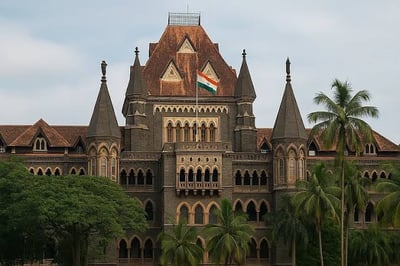
In a significant development for democratic freedoms, a 49 year old political leader and activist named Saeed Ahmad Abdul Wahid Chaudhary successfully challenged a harsh 1 year banishment order issued against him by the Mumbai police. This dramatic event forms the core of the headline captured in the file image_de77c5.png, where a judge openly asks why citizens cannot raise anti government or anti minister slogans. The controversy started when the Deputy Commissioner of Police for Zone 6 in Chembur passed an externment order on December 3, 2025, forcing Chaudhary to leave the limits of Mumbai within just 2 days. This directive was later formally upheld by the Divisional Commissioner of the Konkan Division on March 27, 2026. The state authorities based their severe action on 5 first information reports registered against Chaudhary between the years 2019 and 2024. Most of these criminal cases were tied directly to his role as the state general secretary of the Socialist Democratic Party of India, where he organized public rallies, marches, and sit in demonstrations against major federal policies including amendments to the Citizenship Act and controversies surrounding the Waqf Board. Trapped in a situation where he was banned from his own home turf right before crucial local civic body elections, Chaudhary decided to approach the high court to defend his basic liberties.
The courtroom proceedings turned intensely dramatic as the single judge bench took the state authorities to task over their highly questionable arguments. Justice Madhav Jamdar scrutinized the case details and demanded to know why simple political slogans like BJP government murdabad or Amit Shah murdabad should attract the extreme measure of banishment from an entire region. The judge made several strong oral observations during the session, stating clearly that citizens cannot be turned into slaves of the central government. He reminded the prosecution that police officers are public servants who owe their loyalty to the general public and the constitution, rather than acting as submissive servants to the chief minister or the prime minister. The bench also pointed out that modern society is filled with citizens raising their voices against structural failures, referencing the recent mass agitations by students over the National Eligibility cum NEET exam paper leaks. The judge asked the state if they intended to pass similar banishment orders against every young student or citizen who chose to step out onto the streets to protest against institutional mismanagement, thereby highlighting the ridiculous nature of the state action.
Taking a closer look at the entire incident reveals a dangerous trend where special preventive laws are twisted to suppress political opposition rather than maintaining actual peace. The Maharashtra Police Act grants special powers to remove dangerous elements, but using these tools against an individual who merely leads peaceful political rallies shows a clear abuse of power. The police claimed that the actions of Chaudhary had established a kingdom of terror in the locality, yet this claim was thoroughly rubbished by local shopkeepers and residents who testified to the peaceful nature of his public activities. The court also shed light on the problematic political atmosphere by bringing up the ongoing issues of political horse trading in the region. The judge jokingly remarked that if an individual has multiple cases registered against them, they could easily switch political parties to find themselves clean inside the famous political washing machine. This sharp observation exposes how state machinery can be used selectively to punish those who choose to dissent while rewarding those who fall in line with the ruling powers, proving that the legal actions taken in this specific matter were entirely malicious.
In its final resolution of this major constitutional matter, the bench completely quashed and set aside the orders of both the police department and the divisional commissioner. The written order formally declared that opposing the policy choices of the administration cannot be treated as a valid ground to throw a person out of their home jurisdiction. The judiciary forcefully reestablished that article 19 and article 21 of the constitution guarantee not only the freedom of speech and expression but also the right to live life with complete human dignity. The judge even went a step further by warning that he would impose heavy financial costs on the individual police officers who signed off on this unjust banishment proposal. By ensuring that the activist can freely return to his political work and campaign for his party, the judiciary has delivered a massive victory for civil liberties. This case serves as a timeless reminder that dissent is a vital element of a healthy democracy, ensuring that the voice of the common man can never be silenced by the absolute weight of state power.