
Youth Protest Against Vote Chor Gyanesh Kumar And Amit Shah Response See 1984, 40 Years Back?
New Delhi saw massive street demonstrations as student groups, youth organizations, and common citizens came out in large numbers to challenge the election authority. Carrying handmade signs and chanting slogans against vote theft, the young demonstrators demanded clear answers from Chief Election Commissioner Gyanesh Kumar over missing entries in official voter lists. These young protesters gathered outside designated spots, pointing out that their fundamental right to cast a vote is under serious threat before upcoming election cycles. For this new generation of voters, the demonstration was focused on the present condition of democracy and their right to choose their own representatives freely.
The controversy gained strong momentum after opposition parties organized a massive gathering at the historic Ramlila Maidan under their campaign to save the national vote. Opposition leaders, including Rahul Gandhi, directly attacked Gyanesh Kumar, accusing the election body of quietly helping the ruling party by erasing genuine names from official rolls. Rahul Gandhi warned from the stage that the election chief would eventually face prison for what he called treason against the country, stating that the current government mandate was built on stolen public support. The bold words echoed across the ground, drawing loud support from thousands of young attendees who had traveled from nearby states.
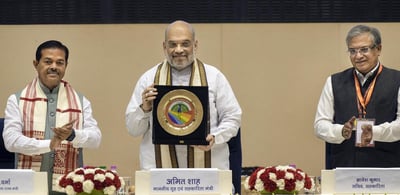
While young protesters raised questions about digital voter rolls and deleted names, the central government chose to shift the entire conversation toward the past. Union Home Minister Amit Shah responded to the massive gathering from Chandigarh, launching a sharp attack against the organizers. Instead of addressing the concerns of young voters about current voting lists, the senior minister asked the nation to look back 40 years to the dark events of 1984. He claimed that holding a political gathering at this exact time was an insult to the memory of thousands of Sikhs who lost their lives four decades ago.
The government based its strong criticism on the dates chosen by the protest organizers. Amit Shah explained that the ruling Bharatiya Janata Party had repeatedly urged leaders not to organize any political gathering on the anniversary dates of the 1984 violence. He accused opposition parties of rubbing salt into the old wounds of riot victims who are still waiting for full closure. Ruling party leaders also organized counter-marches across parts of western Delhi, holding up black flags and reminding local residents of past communal suffering rather than talking about the election commission.
Young protesters on the ground expressed frustration over this backward-looking political response. Many students pointed out that while national history must be respected, using an event that took place 40 years back to ignore present voting problems feels like a political diversion. Several young people who spoke at the demonstration noted that they were not even born when those tragic events happened. Their immediate worry was finding out why their names, along with the names of their friends and parents, had suddenly disappeared from voting records ahead of elections.
The Election Commission has consistently rejected all allegations of foul play, stating that voter revisions are done strictly under legal guidelines. Government spokespersons supported this stance, arguing that official lists are only updated to remove deceased citizens, duplicate accounts, and people who moved to different areas. They accused the opposition of spreading baseless conspiracy theories among impressionable young students to hide their own repeated failures at the ballot box.
The demonstrations created major civic disruptions across central parts of the national capital. Delhi Police deployed heavy security units, set up iron barricades across roads leading to sensitive office areas, and placed water cannons on standby. Several metro stations in the central zone faced temporary entry and exit restrictions to prevent crowd overcrowding. Police teams detained hundreds of student workers who attempted to march past security lines toward central government buildings, leading to tense standoffs throughout the afternoon.
Political observers noted that the deep divide between the youth questions and the government response shows an ongoing battle of public narratives. One side is asking practical questions about current civic records, technology, and transparent election rules. The other side continues to use powerful historical memories from 40 years ago to challenge the moral right of opposition leaders to raise these questions. This gap highlights how national debates often get pulled between present administrative demands and older political rivalries.
As evening set in, security personnel managed to clear the main roads while student unions held meetings to plan their next steps. Organizers stated that they will carry their campaign regarding missing votes to other universities and regional centers. The exchange between young protesters demanding answers on present voter rolls and leaders pointing back 40 years to 1984 shows that the debate over democratic institutions is set to remain at the center of national politics.