
AAP Opposes Mandatory E20 Petrol and Launches Public Petition to Demand Fuel Choice
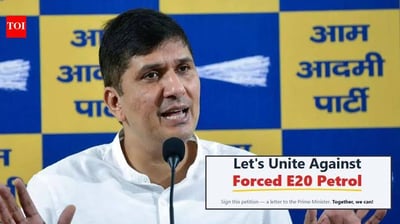
The political heat in New Delhi reached a new high on July 16, 2026, as the Aam Aadmi Party openly declared war against the central government policy of making E20 petrol mandatory across the country. Senior party leader Saurabh Bharadwaj took to social media platform X to launch a massive online public petition, urging motorists to raise their voices against what he describes as a forced fuel transition. The petition, which is addressed directly to Prime Minister Narendra Modi, quickly gained immense traction online, securing more than 80000 signatures in a very short period. Motorists from various parts of India have expressed deep distress over the unavailability of conventional, unblended fuel at filling stations, stating that the current administrative push completely ignores the everyday struggles of vehicle owners.
The core of the public anger lies in the physical and financial damage that E20 petrol, which contains 20% ethanol blended with 90% regular gasoline, supposedly inflicts on vehicles. The public petition claims that there is absolutely no logic, science, or economics backing the government decision to completely phase out pure fuel options. Motorists are complaining that this high ethanol blend reduces the overall efficiency of their engines, causing a noticeable drop in fuel mileage. Because ethanol has a much lower calorific value than pure petroleum, drivers end up burning more fuel to cover the exact same distance. This reduction in efficiency means everyday citizens are spending significantly more money on transportation while the cost of the fuel remains high, triggering widespread financial anxiety.
From a critical perspective, the situation exposes a severe gap between ambitious national green energy goals and the technical realities faced by common citizens. The central government introduced the E20 mandate as a major step in its biofuel strategy to cut down expensive crude oil imports and reduce carbon emissions. However, enforcing this policy without offering separate fuel dispensers at filling stations has essentially trapped consumers. Older car and motorcycle models are not built to withstand the corrosive nature of high ethanol contents, which can degrade rubber seals, fuel lines, and metal parts inside the engine over time. By forcing everyone to use the same blended fuel, the state is pushing the financial burden of vehicle wear and tear onto the public without providing any compensation or alternative choice.
The ongoing protest highlights an urgent need for the government to reevaluate its pricing and distribution strategy for blended biofuels. The petition puts forward 2 fair demands, asking the government to restore the freedom of choice by offering both pure petrol and E20 at distinct prices, while also lowering the rate of the ethanol blend to reflect its lower energy output. It is inherently unfair for citizens to pay premium prices for an inferior fuel that yields fewer kilometers per liter. If the ruling administration wishes to make environmental reforms successful, it must win public trust through fair pricing and gradual transitions rather than high handed mandates that harm the pockets of everyday commuters.