
Arvind Kejriwal Prime Minister Residence March Announced Over Mandatory E20 Fuel Policy Controversy
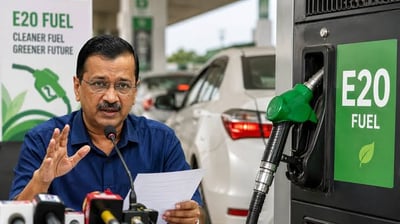
A major political confrontation has erupted across the national capital as Aam Aadmi Party national convenor Arvind Kejriwal escalated his campaign against the mandatory implementation of 20 percent ethanol blended petrol, known as E20 fuel. Speaking at a town hall meeting organized at the Constitution Club of India on 1 August 2026, the former Delhi chief minister announced that he will lead a march of 100 supporters to the residence of Prime Minister Narendra Modi on Lok Kalyan Marg on 4 August 2026. The planned protest aims to submit thousands of public petitions gathered from vehicle owners who express growing concern over potential engine damage, reduced mileage, and financial losses caused by the new fuel policy. Arvind Kejriwal urged citizens across the nation to temporarily halt purchasing new petrol and diesel vehicles until automobile companies start manufacturing E100 compatible engines, warning that the current policy imposes severe risks on vehicle owners.
The core of the political opposition centers on consumer choice, pricing discrepancies, and technical transparency surrounding older vehicles. The opposition leader presented 3 key demands to the central government, insisting that every fuel station must offer customers the freedom to choose between pure petrol and E20 fuel. He further argued that E20 fuel should be sold at a significantly lower rate than pure petrol, pointing out that pure petrol should ideally cost around 82 rupees per liter and E20 fuel around 70 rupees per liter, compared to the current uniform price of 102 rupees per liter charged at filling stations. Raising technical concerns, he highlighted that nearly 30 crore vehicles manufactured prior to 2023, comprising 22 crore 2 wheeler vehicles and 8 crore 4 wheeler vehicles, face potential fuel line corrosion and engine wear. He called upon government authorities to publicly release the official scientific and engineering reports that validate the safety claims of E20 fuel for older automobile models.
Adding a strong economic critique to the ongoing debate, Arvind Kejriwal alleged that the mandatory rollout of E20 fuel is linked to foreign trade commitments rather than domestic agricultural benefits. He claimed that national ethanol imports are projected to increase 5 times over previous levels, asserting that local farmers are not receiving the full economic advantages promised under the bio fuel policy. According to his allegations, local ethanol production has created environmental burdens on soil and water resources in rural areas while forcing high cost imported blending materials into the domestic market. The opposition convenor claimed that the central government summoned representatives from 6 major automobile manufacturers on 3 July 2026 to reassure the public, while allegedly discouraging companies from issuing detailed compatibility disclosures regarding older vehicle engines.
Government officials and ruling party representatives have strongly rejected these allegations, maintaining that the ethanol blending program is rooted in comprehensive scientific research and strategic economic goals. The Union Ministry of Petroleum and Natural Gas emphasized that achieving the 20 percent ethanol blending target in July 2025, well ahead of the original 2030 deadline, plays a vital role in reducing crude oil import dependency, curbing carbon emissions, and boosting rural economies. Senior industry representatives from leading car manufacturers, including Maruti Suzuki, reported that service data covering over 2.84 crore vehicles in fiscal year 2026 revealed no evidence of abnormal component wear, corrosion, or engine degradation resulting from E20 usage. While administrative authorities stress that the initiative strengthens national energy security and saves valuable foreign exchange, political opposition leaders insist that regulatory transparency, independent testing disclosures, and fair pricing mechanisms remain necessary to protect millions of daily commuters.