
Assam BJP Passed UCC Bill Allowing Scheduled Castes To Marry More Than 10 Women While Restricting Others
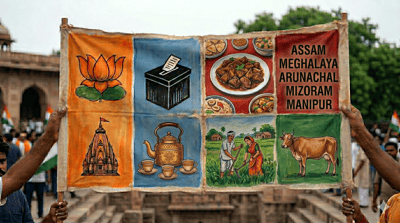
The political landscape of Northeast India witnessed a historic shift as the Assam Legislative Assembly officially passed the Uniform Civil Code Assam 2026 Bill. Introduced by the ruling豪 Bharatiya Janata Party government under Chief Minister Himanta Biswa Sarma, Assam has now become the third state in India to adopt a unified civil framework, following the footsteps of Uttarakhand and Gujarat. The primary objective of the newly passed legislation is to create a single, unified legal system that governs personal matters such as marriage, divorce, inheritance, and live in relationships across various religious communities. Key features of the bill include fixing the legal marriage age at eighteen for women and twenty one for men, making the registration of marriages and live in relationships absolutely mandatory, and banning polygamy with strict penalties of up to seven years of imprisonment. The government has hailed this move as a landmark achievement for women rights, claiming it will eliminate gender discrimination deeply rooted in various customary laws.
However, the passage of the legislation has opened up a massive pandora box of political controversy and public anger due to its highly selective and discriminatory application. The opposition and multiple social activists have launched a fierce attack on the state government, pointing out major contradictions that destroy the core definition of a uniform law. The biggest point of contention is the total exemption granted to various tribal groups and the unequal legal standards set for different communities. Under the current framework of the bill, the ruling dispensation has created a bizarre and deeply unfair division where a general category citizen is strictly bound by the law to marry only one woman, while individuals belonging to certain exempted categories and Scheduled Castes face no such restriction and can legally marry more than ten women without any problem. Critics have labeled this a shameless political move by the BJP and Himanta Biswa Sarma, arguing that the administration has compromised basic social ethics and gender justice just to secure specific vote banks.
Furthermore, a deep wave of frustration is growing among common citizens who feel that the ruling dispensation is using intense emotional and religious debates around the uniform civil code as a tactical shield to divert public attention away from severe financial burdens. Right after the conclusion of the election cycle, citizens across the state were hit hard by sudden and massive tax hikes on essential commodities, leading to skyrocketing prices for petrol and diesel. The public is questioning why the administration is prioritizing complex social surveillance systems, such as the mandatory registration of live in relationships, while the ordinary household budget is collapsing under heavy inflation. There is a strong sentiment that the state should focus on solving core economic problems like rising unemployment, devastating annual floods, and struggling public infrastructure rather than deploying moral policing mechanisms that intrude into the private spaces of adult citizens while simultaneously allowing regressive social practices for favored groups.
In terms of long term impact, the legislation presents a mixed bag of potential social transformations and severe structural challenges. On the positive side, the clear mandate for equal inheritance rights for women is a progressive step that could significantly empower daughters and wives who have historically been denied property rights under traditional patriarchies. The mandatory registration framework also provides a formal paper trail that can help vulnerable women claim legal maintenance and financial security in cases of abandonment. On the flip side, the heavy handed legal penalties and the creation of a vast bureaucratic machinery to spy on personal choices raise serious constitutional questions about individual privacy and personal autonomy. By dividing the population into strict legal tiers where general citizens face heavy jail time for actions that other castes are allowed to practice freely, the state risks creating deeper social divisions, caste rivalries, and total legal confusion. Ultimately, while the administration celebrates this as a historic triumph, the true test lies in whether it can deliver real economic relief alongside social reforms, or if it will remain remembered as a divisive political tool that strained the pockets and liberties of ordinary people.