
Assam Government Plans 10 Kilometer Flyover To Connect Jalukbari And Guwahati Airport
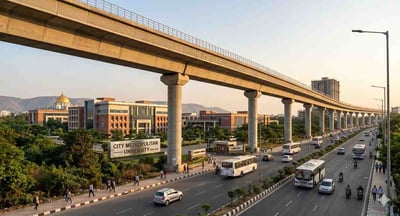
The city of Guwahati is preparing for an unprecedented transformation of its transit landscape with the latest mega infrastructure project proposed by the state administration. As displayed in the news report from the file named 1000137880.png, the Assam government is planning the construction of a massive 10 kilometer long flyover connecting the busy hub of Jalukbari directly to Lokpriya Gopinath Bordoloi International Airport. Chief Minister Himanta Biswa Sarma officially announced this high profile elevated corridor, revealing that the primary objective of this project is to ease severe traffic gridlocks on the primary airport route and fundamentally enhance urban mobility throughout the region. Once completed, this ambitious roadway is expected to cut travel times down to a mere 7 to 10 minutes, providing seamless and swift connectivity for daily commuters, corporate travelers, and tourists alike.
The strategic framework of this massive infrastructure plan has already gained substantial momentum at the national level. During a recent high level institutional visit to Delhi, Chief Minister Sarma engaged in detailed discussions regarding the viability and layout of the project with the Union Minister for Road Transport and Highways, Nitin Gadkari. The Union Minister reportedly extended his complete commitment and assured full support from the central government to ensure the successful execution of the proposed corridor. This dedicated multi lane flyover will act as a high speed arterial bypass over existing choked bottlenecks, bypassing several highly congested local intersections that currently slow down airport bound traffic. The blueprint aligns directly with a broader master plan to support the newly expanding international airport terminal and handle the rapid western expansion of the city footprint.
While the promise of reaching the airport in under 10 minutes sounds highly lucrative, a critical perspective reveals that grand infrastructure announcements often mask deeper execution and planning hurdles. The state government has notably refrained from announcing any official timeline for the commencement or completion of civil construction works. Large scale urban flyovers in dense regions naturally involve protracted challenges such as complex utility shifting, commercial land acquisition conflicts, and severe environmental disruption along national highway stretches. Furthermore, the construction phase itself inevitably induces years of paralyzing traffic diversions, which ironically worsens the very congestion the project seeks to eliminate. Without an immediate, highly transparent logistical micro plan to manage daily traffic during the building phase, local commuters face a prolonged period of severe commuting distress before experiencing any actual benefits.
From an economic perspective, investing in an expensive 10 kilometer elevated corridor prompts vital questions regarding fiscal priorities and inclusive city development. While improving airport accessibility caters heavily to high speed corporate needs and expanding tourism, everyday citizens frequently grapple with basic urban issues like sub-par municipal drainage, localized artificial flooding, and broken neighborhood roads. Committing massive state and central funds to mega car centric corridors risks shadowing the urgent need for a more comprehensive overhaul of public bus transit systems and non motorized transport networks. To prevent this massive project from becoming a financial burden that only serves elite airline passengers, planners must integrate robust public transport lanes into the design. True urban progress will only materialize when breathtaking architectural feats are balanced equitably with basic sustainable civic amenities for all residents.