
Australia Built 7.3 Kilometre Iron Ore Train That Smashed World Records
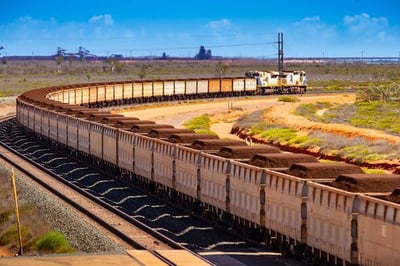
The remote and dust filled outback of Western Australia became the stage for one of the greatest mechanical achievements in human history on 21 June 2001. The global mining company BHP decided to push the absolute limits of heavy rail transportation by assembling a freight train that stretched an unbelievable 7.3 kilometres in total length. This massive steel serpent was put together to carry high grade iron ore from the inland Yandi and Newman mines across a distance of 275 kilometres to the coastal shipping port at Port Hedland. For anyone standing at a rail crossing, watching this train pass would take nearly half an hour of continuous movement, a sight that completely redefines the scale of modern logistics and heavy engineering.
The technical breakdown of this giant machine highlights the extreme complexity required to keep it moving safely down the tracks. The train was made up of 682 individual ore wagons, supported by a staggering 5,648 steel wheels rolling in perfect unison. To move a total gross weight of 99,734 metric tons, the operation required the immense power of 8 General Electric diesel electric locomotives. Instead of placing all the engines at the very front, engineers strategically distributed them in pairs throughout the entire length of the train. This smart distribution was vital because if all 8 engines pulled from the front, the extreme physical tension would instantly snap the heavy metal couplers connecting the wagons, resulting in a catastrophic runaway disaster in the middle of the desert.
Looking closely at the operation reveals that this was not just a show of brute strength, but a high risk experiment in new radio control technology. The entire 7.3 kilometre monster was controlled by just 1 single train driver sitting in the front cabin. The single operator utilized an advanced signal system to send instant commands to the automated trailing engines located kilometres behind him. While the run successfully entered the Guinness World Records, the extreme physical forces involved mean that operating trains of this massive size on a daily basis is highly impractical. The immense wear and tear on the tracks, the risk of communication delays between distant engines, and the logistical nightmare of blocking multiple rail crossings make it clear why companies choose to run shorter, more manageable trains for standard daily operations.
Ultimately, this historic run proved exactly what human ingenuity can accomplish when faced with the challenge of moving vast natural resources across harsh environments. The train successfully delivered 82,000 metric tons of essential iron ore to the port, securing a dual world record for both the longest and the heaviest train ever operated. Although standard mining trains in Australia have since been scaled down to a more practical length of 2.5 kilometres for daily commercial safety, the legendary 2001 journey remains a golden standard. It stands as a brilliant reminder of how clever engineering, advanced radio communication, and sheer determination can turn a wild industrial dream into a record breaking reality.