
Skyroot Aerospace Ready to Launch Vikram 1 as India First Private Orbital Rocket Makes Space History at Sriharikota
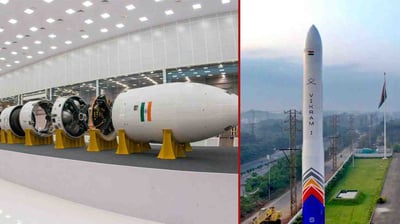
The Indian commercial space landscape is on the verge of a historic transformation as the domestic aerospace startup Skyroot Aerospace prepares for the maiden orbital flight of its indigenously developed launch vehicle. The seven storey tall rocket, named Vikram 1 in profound honor of the father of the Indian space program Dr. Vikram Sarabhai, is officially scheduled for lift off on July 18, 2026, at precisely 11:30 AM IST. The high stakes mission, poetically named Mission Aagaman to signify the arrival of private players in the global orbital launch market, will take place from the first launch pad at the iconic Satish Dhawan Space Centre in Sriharikota. Integration teams completed final vehicle stacking and thorough launch pad checks from the Hyderabad based firm control room on July 16, 2026, establishing seamless communication links with tracking radars and telemetry ground stations across the coastal range. This crucial launch window represents a giant leap forward from the company successful suborbital flight executed back in November 2022, transitioning India from experimental private space tests into serious commercial satellite deployment operations.
The highly complex engineering behind Vikram 1 highlights a sophisticated blend of modern manufacturing methodologies, featuring an all carbon composite structural body designed to minimize dead weight while maximizing mechanical strength. The multi stage rocket relies entirely on propulsion systems developed completely in house by the tech startup, including high thrust solid fuel boosters and advanced 3D printed liquid fuel engines engineered for precise velocity control. For this critical debut test flight, the vehicle is targeting a stable low Earth orbit at an altitude of 450 kilometers with a precise 60 degree orbital inclination, carrying a maximum payload capacity of up to 350 kilograms. The maiden flight will carry 4 distinct technology demonstration payloads built by active global and domestic aerospace firms. These include the Solaras S3 earth observation nanosatellite designed by Bengaluru based Grahaa Space, a specialized space junk clearance system engineered by Cosmoserve Space, hardware components from DCUBED, and the internal SCOPE satellite designed by Skyroot to archive essential structural load data during the supersonic ascent. In addition to these technical payloads, the rocket will carry a handwritten postcard from Prime Minister Narendra Modi bearing the message Vande Mataram alongside miniature gold sculptures honoring legendary Indian scientists.
From a broader strategic standpoint, the execution of Mission Aagaman serves as an acid test for the massive policy modifications introduced by the central government to dismantle the public sector monopoly over strategic aerospace assets. While the Indian Space Research Organisation has successfully shared its basic small satellite launch vehicle technology with external industry consortiums, the independent development of a full scale orbital class launcher by a private enterprise shows deep technical maturity within the startup ecosystem. The global commercial market for small satellite constellations is expanding exponentially, yet global payload delivery capabilities face extreme supply constraints and lengthy scheduling backlogs. By entering this lucrative space with a flexible, on demand operational model, domestic players can capture a large share of international launch contracts. However, moving from a controlled ground testing environment into actual atmospheric flight carries immense risk, as any structural separation failure or minor software tracking deviation could derail investor confidence and slow down capital inflows for the newly crowned 1.1 billion dollar startup unicorn.
Senior operational executives confirmed that the main objective of this inaugural mission is to collect comprehensive in flight validation data regarding stage separations, navigation systems, guidance controls, and thermal shield performance under extreme atmospheric friction. The company leadership openly recognized that the data gathered from the real world flight environment will be brought back to the manufacturing floor to refine and perfect mass production techniques for future commercial orders. Space regulatory bodies have already finalized structural security perimeters, issuing required maritime and airspace exclusion zone warnings along the eastern sea corridor to guarantee public safety during the initial flight path. As the countdown approaches the final hours, the upcoming launch represents a profound cultural shift where domestic space exploration is no longer driven solely by state funding, but by competitive private innovation aiming to make space travel accessible to the entire world.