
BJP Led Bengal Government CID Faces Outrage For Trying To Interrogate Senior Advocate Kalyan Banerjee Over Active Lawsuit
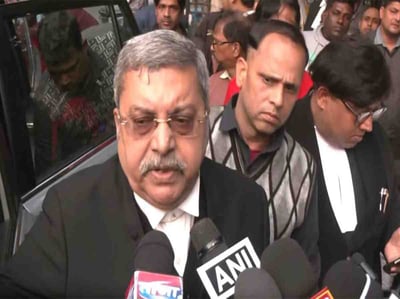
The legal and political ecosystem in West Bengal is dealing with a severe institutional showdown that directly impacts the independent functioning of the bar. The Criminal Investigation Department operating under the newly formed Bharatiya Janata Party state government led by Chief Minister Suvendu Adhikari has drawn intense condemnation after an official targeted Trinamool Congress Member of Parliament Kalyan Banerjee. The veteran leader who has practiced as a prominent Senior Advocate for over 45 years received a direct phone call on his personal mobile device from an investigative officer demanding permission to interrogate him. The proposed interrogation session directly involves an ongoing criminal inquiry into alleged signature forgery within the state legislature. This aggressive tactic by state law enforcement has triggered widespread alarm among high court practitioners who view the intervention as a direct attempt by the current political establishment to pressure an arguing defense counsel and break down the foundational principles of lawyer client privilege.
The underlying legal dispute is deeply tied to a massive political rebellion within the West Bengal Legislative Assembly where a major factional split has redefined the assembly balance. Out of 80 original Trinamool Congress lawmakers a dominant group of 65 MLAs broke away to align against the core party leadership leaving only 15 loyalists on the other side. Senior Advocate Kalyan Banerjee is currently representing loyalist leader Sobhandeb Chatterjee in an active high court writ petition numbered WPO 276 of 2026 which challenges the Speaker decision to officially recognize rebel leader Ritabrata Banerjee as the Leader of the Opposition. The criminal investigation stemmed from a first information report registered at the Hare Street Police Station alleging that 14 signatures on an internal party resolution nominating Chatterjee were completely forged. The BJP administration subsequently transferred the sensitive case to the specialized state investigation agency which is now attempting to cross examine the lead arguing lawyer while the critical constitutional arguments remain actively listed for final judicial determination.
This aggressive move by state investigators under the control of the ruling party raises deep structural issues regarding constitutional protections and the established boundaries of executive police powers. Under long standing Indian jurisprudence a Senior Advocate functions strictly as an officer of the court and possesses clear statutory immunity under the Indian Evidence Act to safeguard confidential briefs received from clients. By attempting to place a senior counsel under formal police interrogation regarding the specific contents of an active judicial brief the state law enforcement setup risks creating a dangerous precedent that completely threatens adversarial legal rights. Legal analysts warn that if state police units are granted the administrative leverage to question practicing advocates under the pretext of validating document authenticity the independent institutional defense mechanism available to regular citizens will completely fall apart. The controversial phone call highlights a growing pattern where state machinery is deployed against legal representatives to gain tactical and psychological advantages in highly volatile courtroom litigations.
Following the disturbing communication the veteran lawmaker filed a formal protest letter with the Calcutta High Court Bar Association Secretary demanding immediate protective intervention for the legal community. The senior counsel publicly questioned how a state police officer could find the legal audacity to demand an interrogation session from an advocate who is actively performing his institutional duties before a sitting high court judge. The regional Bar Association is currently planning to pass a strong collective resolution condemning the state action and may initiate formal contempt of court proceedings to prevent similar administrative overreach against practicing lawyers. Moving forward this escalating confrontation underscores the absolute necessity of maintaining a rigid wall between political law enforcement operations and the protected legal rights of court counsel. If the state judiciary fails to enforce clear punitive boundaries against this administrative intrusion by the state investigation unit the fundamental constitutional right of citizens to obtain unhindered legal representation will be permanently damaged.