
BJP Love Hindu or Love Vote. Beef Banned in UP and Haryana but Allowed in Assam and Goa
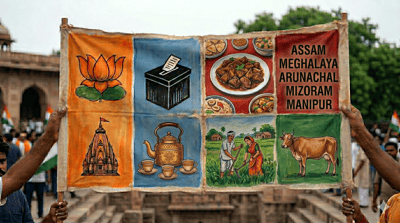
The debate surrounding dietary habits and political motives in India has become a central point of discussion. Across northern states like Uttar Pradesh and Haryana, regional governments have enacted some of the strictest laws against cattle slaughter. This intense legal focus has been accompanied by a notable rise in vigilante activity, where unverified rumors regarding food choices frequently spark public confrontations. Recent incidents in places like Charkhi Dadri and older cases in Ballabhgarh show how easily transport disputes or rumors can escalate into dangerous mob situations. In these northern areas, severe punishments and administrative actions are presented as a direct commitment to traditional values, which serves to unite a massive segment of the local electorate behind a singular cultural identity.
In sharp contrast, moving toward states like Assam and Goa reveals a completely different administrative strategy by the very same political leadership. In Goa, where a large Christian and Muslim population resides alongside a massive tourism industry, the state government has historically ensured the steady availability of meat through official channels to prevent shortages. Meanwhile, in Assam, the regional administration implemented a selective compromise rather than a total prohibition. The local law restricts cattle slaughter only within a five kilometer radius of temples and in Hindu majority areas, intentionally leaving other diverse districts free to continue their traditional practices. This regional flexibility shows an acute awareness that enforcing a total ban in these specific territories would alienate key communities and lead to immediate electoral losses.
This clear geographical split highlights the core mechanics of modern political governance. When an organization maintains opposite policies on the exact same topic based entirely on geography, it indicates that laws are being used as flexible tools for regional survival. In the northern heartland, maintaining a strict stance helps consolidate the majority vote by appealing directly to religious sentiments. Conversely, in the Northeast and Goa, setting those ideological demands aside allows the party to remain competitive and inclusive of local tribal and minority customs. This dual approach indicates that policy decisions are frequently shaped not by a rigid, unchanging doctrine, but by a calculated effort to secure power across vastly different cultural landscapes.
Ultimately, the coexistence of severe legal bans in one region and protected access in another proves that local demographics dictate the law. The administration effectively balances two contradictory stances at the same time to maintain its national presence. While northern communities experience intense polarization and strict legal penalties, the border and coastal regions see their traditional dietary choices structurally protected. This deep regional adjustment demonstrates that when core political ideology runs into the practical reality of winning elections, political survival and regional voting math will always take priority in shaping the final law.