
Choose Between Abhishek Banerjee And Us Loyalists Issue Ultimatum To Mamata Banerjee To End Internal High Handedness
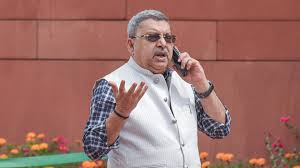
The internal power structure of the Trinamool Congress has reached a critical tipping point as senior party loyalists voice severe public resistance against the central leadership. The political storm intensified dramatically when veteran Lok Sabha MP and senior advocate Kalyan Banerjee issued a direct ultimatum to party chairperson Mamata Banerjee, explicitly telling her that she must choose between her nephew, Abhishek Banerjee, and the seasoned party workers who built the organization. This public confrontation erupted immediately after Kalyan Banerjee and his son were abruptly replaced as defense counsel in a high profile Calcutta High Court signature forgery case involving the national general secretary. This sudden escalation of internal conflict comes at a highly unstable moment for the ruling Bengal party, following the patterns of widespread systemic friction previously highlighted in image_a1d9d7.png and image_a183c5.png where unaddressed operational disputes caused major institutional breakthroughs and collapses.
The precise catalyst for this high level revolt stems from what senior members describe as a continuous pattern of disrespect and administrative exclusion. Kalyan Banerjee revealed that despite practicing law for 45 years and actively pleading for an urgent hearing on behalf of Abhishek Banerjee before the High Court, he was informed past midnight by an emissary that a junior lawyer would be taking over the proceedings. This incident led the veteran MP to completely withdraw from all legal matters involving the Diamond Harbour representative, citing the unyielding arrogance radiating from the national general secretary office. Concurrently, veteran leader Sougata Roy spoke out regarding the deep structural vulnerabilities within the party, noting that a primary grievance across the rank and file relates directly to the absolute high handedness of Abhishek Banerjee. Roy emphasized that the ongoing legislative exodus, which already features nearly 20 rebel Lok Sabha MPs seeking separate faction status, is being severely fueled by the total absence of any internal grievance redressal mechanism within the standard party framework.
An objective review of these simultaneous public outbursts reveals a profound generational and structural division that threatens to permanently fracture the foundational base of the Trinamool Congress. For a long time, veteran loyalists have silently tolerated the centralization of power around the Camac Street corporate style headquarters, but recent severe electoral setbacks in West Bengal have shattered the illusion of absolute strategic control. By blaming the leadership style of Abhishek Banerjee for exposing the party to corruption allegations and severe public anti-incumbency, the old guard is strategically forcing Mamata Banerjee to take an explicit stand. This maneuvering indicates that the traditional emotional appeal used by the Chief Minister to maintain party unity is losing its effectiveness against a younger executive tier that operates without consulting historical party founders. If the leadership continues to treat veteran parliamentarians like secondary entities while prioritizing family succession, the party will face an immediate collapse of its regional organization on the ground.
Halting this accelerating political meltdown will require the party chairperson to immediately step away from ad hoc firefighting and implement genuine democratic reforms within the legislative wing. Sougata Roy has publicly urged Mamata Banerjee to utilize her iconic feisty persona to personally engage with disgruntled members and directly address the legitimate grievances surrounding her nephew behavior. While the central high command is currently leaning on external alliances for political survival, permanent peace cannot be achieved unless regional treatment facilities for internal party disputes are established. Kalyan Banerjee has made it explicitly clear that his personal allegiance to the party chief remains intact for now, but he will be forced to chart an entirely independent legislative course if the nepotistic operational structure is not dissolved. This internal rebellion serves as an ultimate warning that without a swift transition back to consultative, transparent party governance, the organizational integrity of the Trinamool Congress will dissolve completely under the weight of its own internal contradictions.