
Rahul Gandhi Meets Abhishek Banerjee For 90 Minutes As Internal Rebellion Rock Trinamool Congress
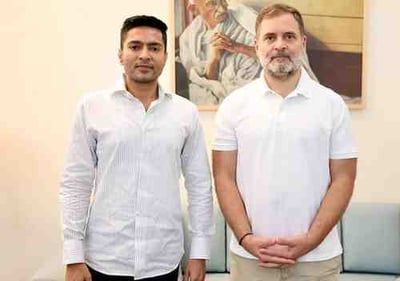
The national capital witnessed major political movements as the Leader of Opposition in the Lok Sabha Rahul Gandhi held a highly confidential 90 minute meeting with Trinamool Congress national general secretary Abhishek Banerjee. This extensive discussion took place at 10 Janpath in New Delhi just a day after Trinamool supremo Mamata Banerjee met with senior Congress leader Sonia Gandhi. The sudden series of high-level meetings between the top brass of both parties highlights an urgent push to stabilize the opposition INDIA bloc and build a united strategy against the ruling government. While official statements regarding the exact agenda remain unavailable, sources close to the development state that the interaction focused heavily on parliamentary coordination and managing local state dynamics.
The timing of this lengthy meeting is highly significant because the Trinamool Congress is currently battling an unprecedented internal rebellion. Following a massive defeat in the recent West Bengal Assembly elections, multiple senior leaders have openly revolted against the party management. Just hours before the meeting, Rajya Sabha member Sushmita Dev resigned from the primary membership of the party and gave up her seat in the upper house. Her departure followed the high-profile exit of another senior lawmaker Sukhendu Sekhar Ray who openly criticized the 15 year rule of the party in Bengal. Furthermore, internal reports indicate that a faction of nearly 20 elected Lok Sabha members are planning a major split to form a separate group, which has severely weakened the bargaining power of the regional party on the national stage.
This internal collapse has forced the Trinamool leadership to seek a closer protective alliance with the Congress party to ensure its survival. By spending 90 minutes with the Leader of Opposition, the regional party is sending a clear signal that it fully accepts the central leadership of the Congress within the broader opposition framework. It appears that the regional outfit needs national backing to protect its remaining flock from shifting allegiance to rival political camps. However, this sudden dependence exposes a major weakness in the strategy of regional parties that try to dominate local politics while ignoring internal democracy. When a regional powerhouse suffers a massive electoral blow at home, its influence in New Delhi diminishes rapidly, forcing it to play a subordinate role to national parties.
For the Congress, this meeting presents an excellent opportunity to regain its footing in West Bengal where it had previously lost significant ground. By positioning himself as the central anchor for a troubled ally, the Leader of Opposition has strengthened his status as the primary face of the national opposition. Moving forward, the success of this alliance will depend on how effectively both parties can balance their local rivalries in West Bengal while maintaining a united front in New Delhi. If the main opposition alliance fails to address the ongoing desertions and factionalism within its member parties, its ability to challenge the government inside parliament will be severely compromised. The real test for both leaders lies in converting these long closed-door discussions into actual floor coordination during the upcoming parliamentary sessions.