
Citizenship Crisis? Brother a Citizen but Sister Deleted as West Bengal and Bihar Launch Massive SIR Crackdown on Ration Cards and Bank Accounts—Will Supreme Court Intervene to Protect Citizens?
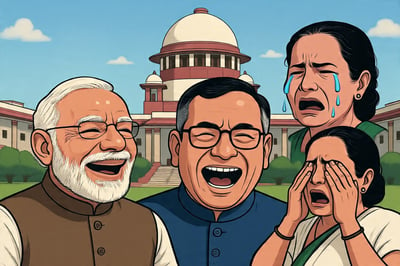
The recent administrative actions in West Bengal and Bihar have triggered a massive wave of anxiety as the Special Intensive Revision (SIR) process moves into a high-intensity phase. In West Bengal, the state government has officially declared that any individual whose name has been deleted from the SIR will no longer be eligible to avail of any government welfare schemes. To enforce this, authorities have begun a rigorous door-to-door and digital audit of ration cards to weed out beneficiaries whose SIR status is no longer valid. This move has left many families in a state of shock, especially as the deletion process appears to be inconsistent. Reports have emerged of bizarre situations where a brother is recognized as a legal citizen while his sister’s name has been inexplicably removed from the rolls. Similarly, there are heart-wrenching cases where a father holds all valid documents, yet his child’s name has been deleted from the system, effectively cutting off the minor from state-sponsored nutrition and healthcare support.
In Bihar, the situation has taken an even more severe turn. The Chief Minister has discussed the unprecedented step of cancelling bank passbooks for those whose SIR entries have been removed. This would not only stop the flow of direct benefit transfers (DBT) but could potentially freeze the personal savings of over five lakh people who have already been removed from the state’s lists. A Bihar minister confirmed that the removal of these names is part of a broader "cleanup" intended to ensure that only legitimate residents benefit from state resources. However, the lack of a clear appellate process for those mistakenly deleted is causing widespread panic. The administrative logic that allows one family member to stay on the list while another is purged suggests a breakdown in the verification machinery, leading to what many local leaders are calling a "documentary identity crisis."
The core of the issue lies in how a person's life can be so easily disrupted by a database update. When a brother remains a citizen but his sister is deleted, or a child is removed while the parents remain, it points to a significant flaw in the data-matching algorithms or the ground-level surveys used during the SIR. The sudden loss of a ration card or a bank account is not just a legal hurdle; it is a direct threat to the survival of the poorest families who rely on these for their daily bread. There is a growing sense of unfairness because the burden of proof has shifted entirely onto the citizen, who must now navigate a complex web of bureaucracy to prove they exist and belong, often with no clear guidance on which documents will be accepted after their primary records have been invalidated.
As the number of affected individuals grows, the question on everyone’s mind is whether the judiciary will step in. Legal experts and civil rights activists are increasingly asking: will the Supreme Court intervene to protect citizens from these arbitrary deletions? Given that the right to food and the right to a livelihood are fundamental under the Constitution, a blanket removal of services based on a contested administrative record could face significant legal challenges. Until a higher court provides a stay or a clear set of guidelines to protect genuine residents from being "erased" due to clerical errors or systemic glitches, the fear of losing one’s identity—and one’s survival—continues to haunt the households of West Bengal and Bihar.